








The social media landscape is more crowded and complex than ever. Choosing where to invest your time, budget, and creative energy is no longer about chasing user numbers; it’s about strategic alignment with your core business objectives. A B2B SaaS company will find little value on a platform dominated by Gen Z fashion trends, just as a local bakery might struggle to gain traction on a network built for professional networking. The wrong choice wastes resources, while the right one can unlock exponential growth.
This guide cuts through the noise. It's a clear, data-driven framework for selecting the best social media platforms for business based on your specific industry, target audience, and goals. We move beyond vanity metrics to provide a comprehensive breakdown of the major players, including Meta (Facebook and Instagram), LinkedIn, TikTok, YouTube, Pinterest, and X (formerly Twitter). We'll also explore tools like PostSyncer that can streamline your management process across these networks.
For each platform, you'll find a detailed analysis covering:
- Audience Demographics: Who actually uses the platform and what they're looking for.
- Best-Use Cases: What types of businesses and marketing goals thrive there.
- Key Content Formats: From short-form video to detailed carousels and professional articles.
- Advertising Capabilities: A look at targeting options, ad formats, and budget considerations.
- Pros and Cons: An honest assessment to help you weigh your options.
This article is designed to be your definitive roadmap. Once you understand the landscape and identify your ideal channels, the next critical step is to truly create a social media strategy that wins for your unique business needs. By the end of this roundup, you will have a clear, actionable plan to not only pick the right platforms but also to implement a strategy that delivers maximum impact and measurable ROI.
1. PostSyncer
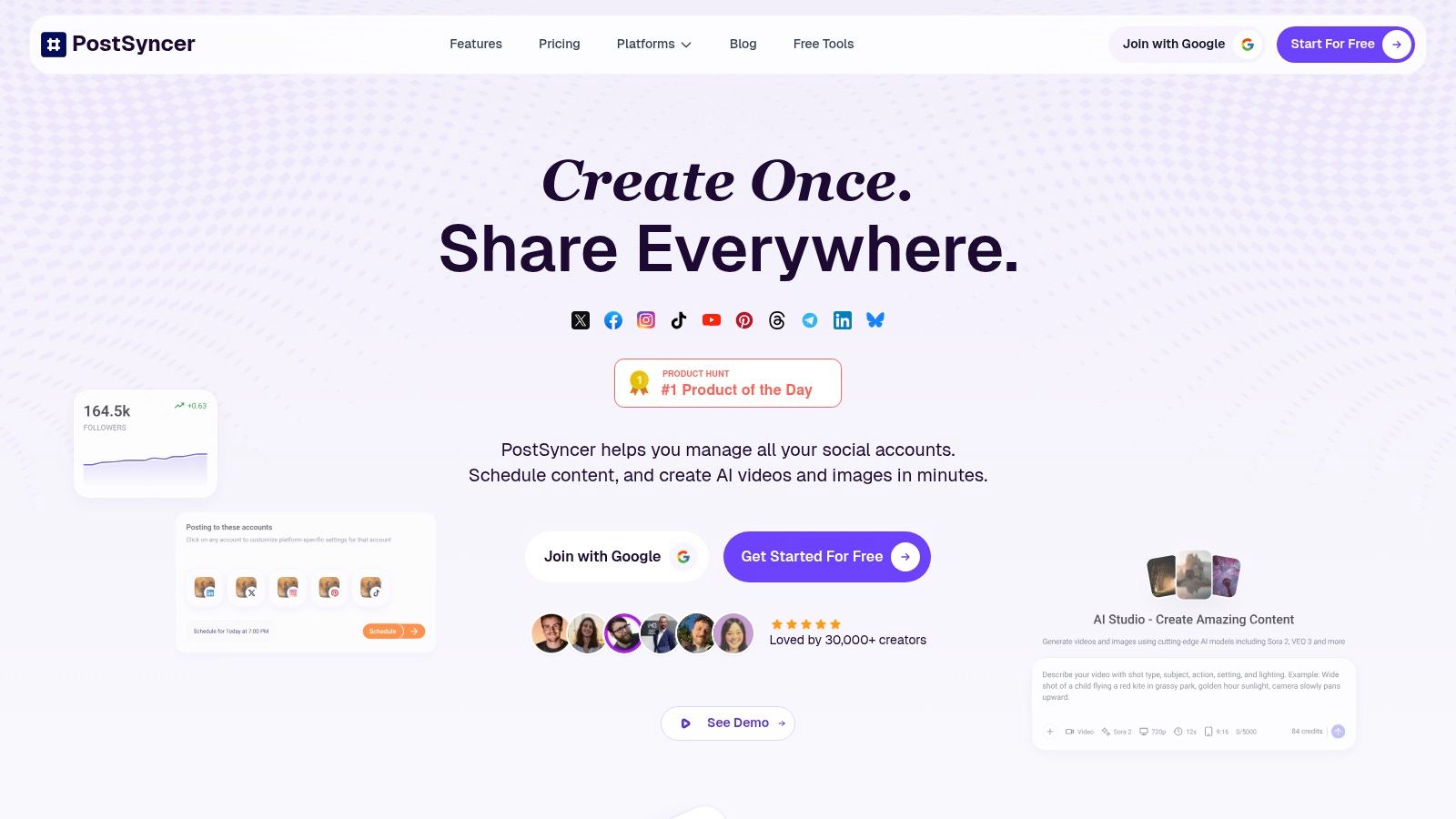
PostSyncer earns its top spot not by being just another social network, but by being an indispensable command center for managing all of them. It is an AI-driven, all-in-one social media management platform engineered to streamline the entire content lifecycle for businesses of all sizes. From solo creators to multi-brand agencies, its comprehensive toolset addresses the core challenges of modern social media marketing: content creation, workflow efficiency, and performance analysis, making it one of the best social media platforms for business management.
The platform’s architecture is built around a powerful, AI-first workflow. Unlike tools that simply schedule posts, PostSyncer integrates an AI Content Studio and AI Video Creator directly into the dashboard. This allows teams to move from ideation to execution in minutes, generating compelling captions, hooks, images, and short-form videos without leaving the platform. This focus on AI-assisted creation is a significant time-saver and a powerful solution for overcoming creative blocks.
Why PostSyncer Stands Out
PostSyncer's primary differentiator is its commitment to team collaboration and scalability without punitive pricing. It offers unlimited team members on all plans, a feature that is typically a high-cost add-on with competitors. This, combined with dedicated workspaces for different brands, role-based permissions, and content approval workflows, makes it an ideal solution for agencies and marketing departments managing complex client rosters.
The platform also provides broad support for the formats that matter most today, including native scheduling for Instagram Reels, TikTok videos, and multi-image carousels across major networks. A unified inbox consolidates comments and messages from all connected accounts, allowing for rapid community engagement from a single, organized interface.
Key Features and Capabilities
- AI-Powered Creation: Generate high-quality copy, visuals, and short-form video clips using monthly AI credits, dramatically speeding up content production.
- Comprehensive Scheduling: Use the drag-and-drop visual calendar to plan and schedule content across Instagram, Facebook, X (formerly Twitter), TikTok, YouTube, LinkedIn, Pinterest, and more.
- Team & Agency-First Design: Collaborate with unlimited users, manage multiple brands in separate workspaces, and enforce brand consistency with built-in approval flows.
- Unified Engagement Hub: Manage comments, replies, and DMs from all your profiles in a single stream to ensure timely community interaction.
- Advanced Analytics: Access detailed performance reports to track key metrics, understand audience behavior, and refine your content strategy with competitive analysis tools.
Pricing and Access
PostSyncer operates on a transparent and accessible pricing model. A 7-day free trial allows users to explore the full feature set.
- Starter Plan: Begins at approximately $19/month (or $15/month when billed annually).
- Pro & Pro Plus Tiers: Offer higher limits on connected accounts, more AI credits, and increased cloud storage for growing teams.
The company emphasizes transparent billing with no hidden per-user fees, making it a predictable and cost-effective investment. This structure is a key reason why many early adopters report upgrading their plans quickly as they realize the platform's value. For a deeper dive into how it compares with other tools, you can explore this detailed breakdown of the top social media scheduling tools to streamline your strategy.
Pros and Cons
| Strengths | Weaknesses |
|---|---|
| AI-First Workflow: Integrated AI tools significantly reduce content creation time and effort. | Account & Credit Limits: Base plans have caps on connected accounts and AI credits that do not roll over. |
| Team-Friendly at No Extra Cost: Unlimited team members and dedicated workspaces support scalable collaboration. | Maturing Advanced Features: Certain enterprise-grade video and bulk-scheduling capabilities are gated to higher tiers. |
| Broad Platform & Format Support: Natively schedule modern formats like Reels, Shorts, and carousels. | |
| Transparent & Affordable Pricing: Clear, value-driven tiers with a free trial and no per-user fees. | |
| Centralized Management: A unified dashboard for scheduling, engagement, and analytics simplifies daily social media tasks. |
Website: https://postsyncer.com
2. Meta for Business (Facebook + Instagram)
For businesses targeting a broad consumer base, the combined power of Facebook and Instagram, managed through the Meta for Business suite, remains an unparalleled force. This unified platform provides a single entry point to manage Pages, set up Shops, and execute sophisticated advertising campaigns across two of the world's largest social networks. Its comprehensive toolset makes it one of the best social media platforms for business, especially for B2C, e-commerce, and local service providers.
The core strength of Meta lies in its mature and powerful advertising infrastructure. Meta Ads Manager offers granular control over every aspect of a campaign, from audience targeting to placement optimization. The platform's ability to reach massive, diverse audiences and then retarget them based on specific actions (like website visits or video views) is a key differentiator.
Key Features and Capabilities
- Unified Management: Use the Meta Business Suite to schedule posts, respond to messages, and view analytics for both Facebook and Instagram from one central dashboard.
- Advanced Ad Targeting: Leverage detailed demographic, interest, and behavioral data to build highly specific audience segments. Create Lookalike Audiences from your best customers to find new, similar users.
- Integrated Commerce: Build native Shops on both platforms, allowing users to browse and purchase products without leaving the app. This direct integration streamlines the path to conversion.
- Diverse Ad Formats: Run campaigns across a wide array of placements, including the Feed, Stories, Reels, Messenger, and more, using formats like video, carousels, and instant experiences.
- AI-Powered Optimization: Tools like Advantage+ use machine learning to automatically find the best audiences, placements, and creative combinations to maximize your campaign's performance, simplifying a complex process.
Expert Tip: Start with a broad Advantage+ Shopping campaign to let Meta's algorithm find your initial customer base. As you gather data, use the pixel and conversion API to build custom retargeting audiences for high-intent users, such as those who abandoned their cart.
Strategic Breakdown
| Aspect | Details |
|---|---|
| Primary Audience | B2C (Millennials, Gen X, Boomers), Local Businesses, E-commerce Brands |
| Best For | Full-funnel marketing (Awareness to Conversion), lead generation, e-commerce sales, community building, event promotion. |
| Recommended Cadence | Organic: 3-5 posts/week per platform. Ads: Continuous for evergreen campaigns, flighted for promotions. |
| Platform Cost & Access | Free to create a Business Page and Shop. Advertising is pay-per-action (e.g., clicks, impressions) with flexible daily or lifetime budgets. Minimum spend can be as low as a few dollars per day. |
| Unique Strength | The sheer scale of its user base combined with a deeply integrated, data-rich advertising ecosystem and native e-commerce tools. |
Pros:
- Unmatched audience reach across diverse demographics.
- Mature and powerful ad platform with detailed reporting.
- Robust e-commerce integrations for direct selling.
Cons:
- Rising ad costs due to competition and seasonality.
- Complex interface can have a steep learning curve for beginners.
- Ad account and creative approvals can be unpredictable.
Explore the platform: Meta for Business
3. LinkedIn Marketing Solutions
For businesses operating in the B2B space, LinkedIn Marketing Solutions is the definitive platform for professional networking, lead generation, and brand building. It has cultivated an environment where business is the primary topic of conversation, making it an indispensable tool for reaching C-suite executives, industry decision-makers, and niche professional talent. Its precise targeting capabilities make it one of the best social media platforms for business when the goal is to connect with specific companies, job titles, or industries.
The core advantage of LinkedIn is its unparalleled access to professional data, voluntarily provided by its members. Unlike consumer platforms that rely on inferred interests, LinkedIn allows advertisers to target users based on concrete, self-reported career information. This eliminates guesswork and ensures marketing budgets are spent reaching the most relevant professional audiences.
Key Features and Capabilities
- Campaign Manager: A robust advertising hub providing granular control over campaign structure, budgets, and optimization goals, with options for classic and accelerated delivery.
- Precise Professional Targeting: Target users by job title, company name, industry, seniority, company size, skills, and more. This is the platform's cornerstone feature for B2B marketers.
- Lead Gen Forms: A native ad format that pre-fills a form with a user's LinkedIn profile data, dramatically reducing friction and increasing conversion rates for lead magnets and demo requests.
- Sponsored Content & InMail: Promote content directly in the professional feed (Sponsored Content) or send personalized messages to the inboxes of key prospects (Sponsored InMail), each with its own billing model (CPC, CPM, CPS).
- Flexible Billing: Offers various billing models (CPC, CPM, CPS) and provides invoicing options for businesses with higher advertising expenditures, accommodating enterprise-level needs.
Expert Tip: Combine Matched Audiences with professional targeting. Upload a list of target companies (Account-Based Marketing) and then layer on job seniority and function filters to ensure your message reaches the exact decision-makers within those key accounts.
Strategic Breakdown
| Aspect | Details |
|---|---|
| Primary Audience | B2B Professionals, C-Suite Executives, Recruiters, High-Income Earners, Enterprise Decision-Makers |
| Best For | B2B lead generation, Account-Based Marketing (ABM), employer branding, thought leadership, high-ticket service promotion, professional event marketing. |
| Recommended Cadence | Organic: 2-4 posts/week. Focus on quality, including long-form content. Find out more on how to post articles on LinkedIn. Ads: Continuous for ABM and lead gen, flighted for events. |
| Platform Cost & Access | Free to create a Company Page. Advertising costs are higher, with recommended minimums around $10-$25/day per campaign to gather meaningful data. Bidding is pay-per-action. |
| Unique Strength | Unrivaled B2B targeting precision based on first-party professional data, making it the premier platform for reaching business decision-makers. |
Pros:
- Industry-leading B2B audience quality and decision-maker reach.
- High user intent and professional context for marketing messages.
- Clear campaign controls and recommended default budgets per ad set.
Cons:
- Significantly higher media costs (CPC/CPM) than most consumer platforms.
- Smaller audience sizes can limit the scale of campaigns compared to B2C networks.
- Requires larger budgets for meaningful testing (often $1,000+/month to see results).
Explore the platform: LinkedIn Marketing Solutions
4. TikTok for Business
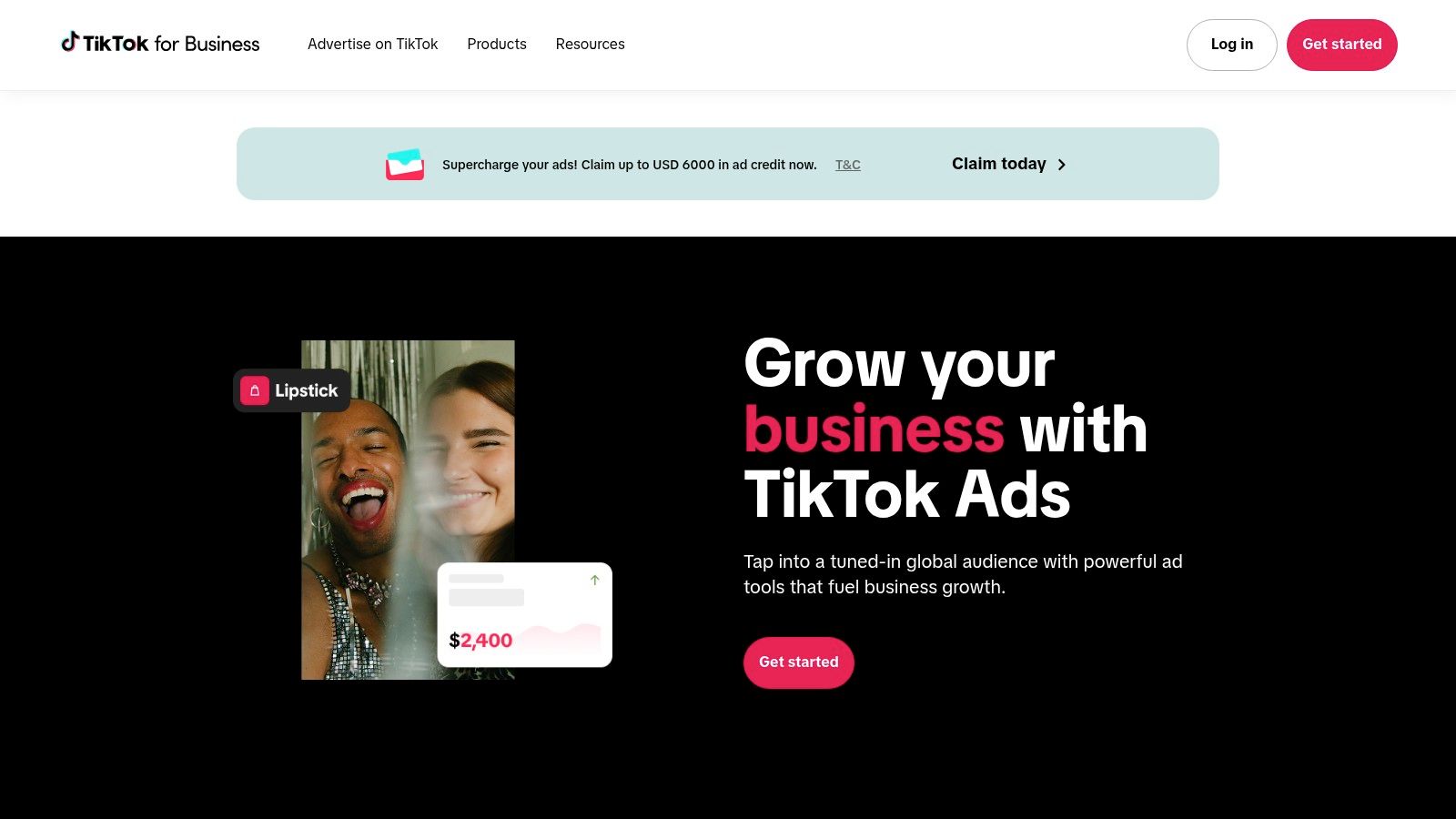
TikTok has exploded from a youth-centric entertainment app into a powerful commercial engine, making TikTok for Business a critical platform for brands aiming to capture the attention of a highly engaged, trend-driven audience. Its unique, algorithm-powered "For You" feed provides an unparalleled environment for discovery, allowing businesses to achieve viral reach and connect with consumers through authentic, creative-first video content. This makes it one of the best social media platforms for business, particularly for direct-to-consumer (DTC) brands, entertainment, and fashion.
The platform's core advantage is its culture of creativity and participation. Unlike other networks where polished ads are the norm, TikTok rewards content that feels native, raw, and entertaining. Success hinges on a brand's ability to "make TikToks, not ads," leveraging trends, sounds, and creator collaborations to build genuine connections with a user base that is highly receptive to product discovery within their feed.
Key Features and Capabilities
- TikTok Ads Manager: A comprehensive platform for creating, managing, and analyzing ad campaigns. It provides tools for audience targeting, budget control, and creative development.
- Smart Performance Campaigns: An automated campaign type that uses machine learning to optimize bidding, targeting, and creative delivery to achieve specific goals like conversions or app installs with less manual oversight.
- Creator Marketplace: A dedicated portal to discover and partner with vetted TikTok creators for authentic influencer marketing campaigns, streamlining collaboration and campaign management.
- Creative-First Ad Formats: Engage users with a variety of formats including In-Feed Ads, TopView (first video upon app open), Branded Hashtag Challenges, and Branded Effects (custom AR filters).
- Business Account Tools: Access real-time analytics, audience insights, and a commercial music library with over 1 million licensed tracks to use in your organic and paid content.
Expert Tip: Don't just repurpose ads from other platforms. Dedicate resources to creating native TikTok content. Use the Creative Center to identify trending hashtags, sounds, and creators in your industry to inform your content strategy and ensure your brand feels authentic to the platform.
Strategic Breakdown
| Aspect | Details |
|---|---|
| Primary Audience | Gen Z and younger Millennials (16-34), with a rapidly growing user base across all age demographics. |
| Best For | Brand awareness, product discovery, community engagement, driving trends, e-commerce sales (especially for viral or visual products). |
| Recommended Cadence | Organic: 1-3 posts/day to maximize discovery. Finding the best time to post on TikTok is crucial for visibility. Ads: Continuous testing of new creatives is required. |
| Platform Cost & Access | Free to create a Business Account. Advertising requires a minimum budget at the campaign level (e.g., $50/day) and ad group level (e.g., $20/day) to exit the learning phase effectively. |
| Unique Strength | An algorithm focused on content discovery over social graphs, giving new accounts and brands the potential for massive viral reach without a pre-existing following. |
Pros:
- Huge potential for organic viral reach and high engagement.
- Access to a massive, influential creator ecosystem for partnerships.
- Powerful discovery algorithm that surfaces relevant content to users.
Cons:
- Creative fatigue is high; requires a constant stream of new video assets.
- Ad platform's learning phase can be sensitive to low budgets, limiting delivery.
- Trends move incredibly fast, demanding agility and quick content production.
Explore the platform: TikTok for Business
5. YouTube Advertising via Google Ads
As the world's second-largest search engine and a premier video-sharing site, YouTube offers businesses a unique opportunity to capture audience attention through compelling visual storytelling. Managed through the powerful Google Ads platform, YouTube advertising provides a direct line to over two billion monthly logged-in users, making it one of the best social media platforms for business when the goal is building brand awareness or driving specific actions through video. It is an indispensable tool for brands looking to engage users where they are actively learning, exploring, and being entertained.
The primary advantage of YouTube is its integration with Google's vast data ecosystem. This allows advertisers to move beyond simple demographics and target users based on their search history, website visits, and demonstrated interests (in-market and affinity audiences). This precision targeting, combined with the immersive nature of video, creates a high-impact environment for everything from product launches to lead generation.
Key Features and Capabilities
- Diverse Ad Formats: Choose from skippable in-stream ads (pay only when users watch), non-skippable ads for concise messages, bumper ads (6-second unskippable clips), and in-feed video ads that appear in discovery feeds.
- Google Ads Integration: Run campaigns directly within the Google Ads interface, reaching users not only on YouTube but also across Google TV and the Google Video Partners network for extended reach.
- Advanced Audience Targeting: Leverage Google's powerful signals to target users based on their life events, in-market purchase intent, custom-built segments from search keywords, and remarketing lists from your website or app.
- Performance Measurement: Utilize tools like Brand Lift to measure the impact of your ads on perception and awareness, and track direct conversions like clicks, sign-ups, and sales with Google's conversion tracking.
- Strategic Planning Tools: Use the Reach Planner to forecast the potential reach and frequency of your video campaigns based on your budget, audience, and location settings, helping you optimize your media plan.
Expert Tip: For a full-funnel approach, use a combination of formats. Start with 6-second bumper ads and non-skippable shorts for broad awareness. Follow up by retargeting engaged viewers with longer, skippable in-stream ads that dive deeper into your product's value proposition and include a clear call-to-action.
Strategic Breakdown
| Aspect | Details |
|---|---|
| Primary Audience | B2C and B2B (Broad reach across Gen Z, Millennials, Gen X), Hobbyists, Researchers, Product Reviewers |
| Best For | Brand awareness, product demonstrations, lead generation (with TrueView for action), driving website traffic, thought leadership, customer education. |
| Recommended Cadence | Organic: 1-2 long-form videos/week. Ads: "Always-on" for top-of-funnel awareness; flighted campaigns for specific promotions or product launches. |
| Platform Cost & Access | Free to create a YouTube channel. Advertising is auction-based with flexible daily budgets. Pay-per-view (CPV), per-impression (CPM), or per-action (CPA) depending on campaign goals. |
| Unique Strength | Unmatched video reach combined with Google’s powerful intent-based targeting signals, allowing for precise audience segmentation at a massive scale. |
Pros:
- Massive reach on the world's premier video platform.
- Granular targeting options leveraging Google's search and behavior data.
- Effective for both top-of-funnel brand building and bottom-funnel direct response.
Cons:
- High-quality video creative is often necessary, which can be costly and time-consuming.
- The Google Ads interface can be complex, and frequent platform updates may require workflow adjustments.
- Campaign performance is highly dependent on creative quality and audience selection.
Explore the platform: YouTube Ads
6. Pinterest Business
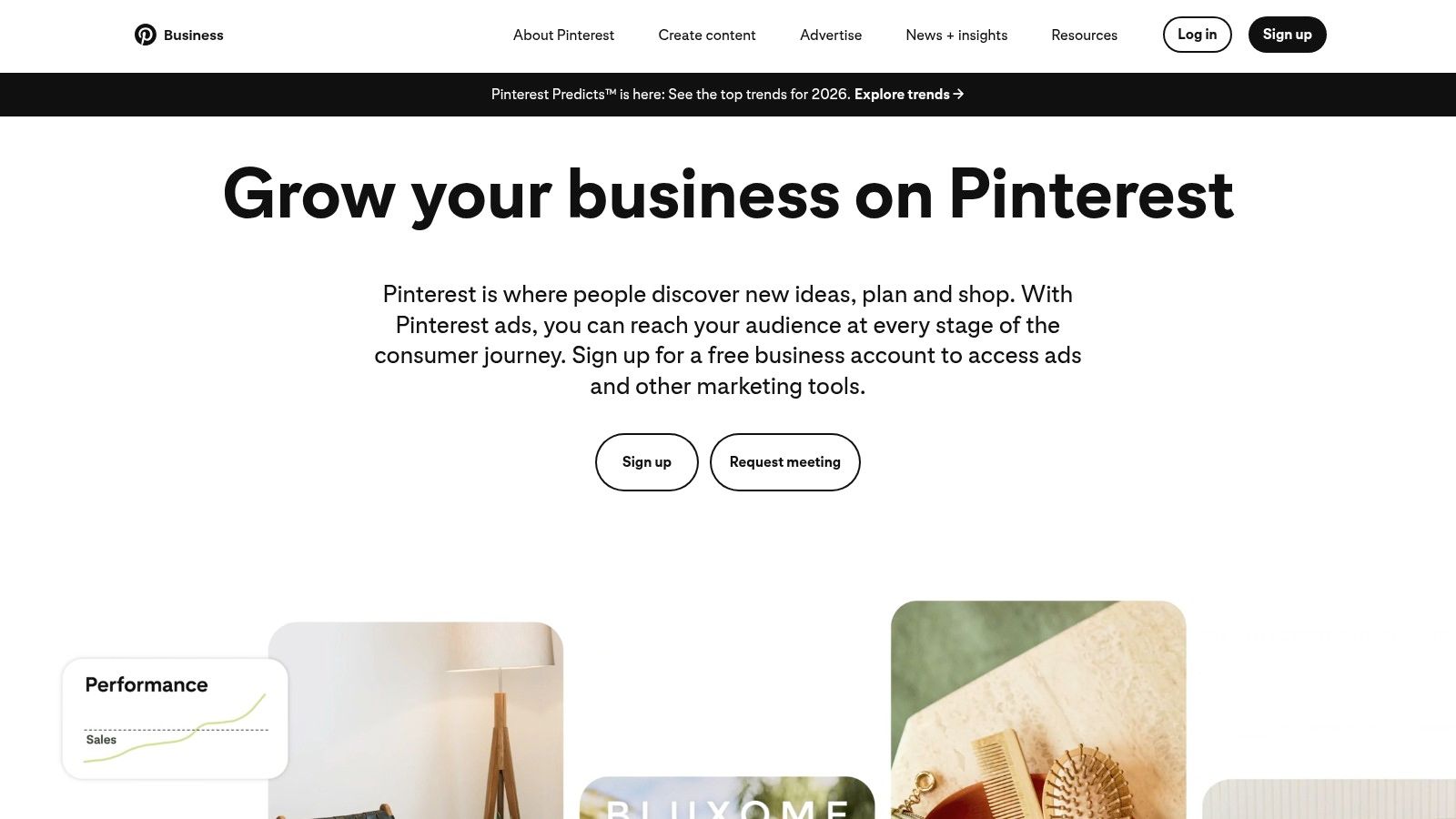
For businesses in retail, home decor, fashion, food, and DIY, Pinterest Business is an essential visual discovery engine. It's not a traditional social network but a platform where users actively search for inspiration, plan future purchases, and discover new products. This unique, high-intent user behavior makes it one of the best social media platforms for business when it comes to driving consideration and e-commerce sales.
Pinterest connects businesses with consumers during the critical planning phase of their purchasing journey. The platform's advertising tools are built to align brand messaging with these moments of inspiration, making ads feel less like interruptions and more like helpful suggestions. Recent AI-powered tools have also simplified campaign setup and creative production, making it more accessible for smaller teams.
Key Features and Capabilities
- Performance+ Campaigns: This automated mode simplifies campaign creation for Consideration, Conversion, and Catalog objectives. It uses AI to handle targeting and bidding, optimizing for performance with minimal manual input.
- Shopping and Catalog Integration: Directly upload your product catalog to create dynamic Product Pins, Shopping Ads, and a dedicated Shop tab on your profile, enabling a seamless path from discovery to purchase.
- AI Creative Tools: Simplify creative production with features like automatic background generation for product shots and smart resizing of assets for different Pin formats, reducing the need for extensive design resources.
- Visual Search Technology: Users can use Pinterest Lens to search with their camera, allowing your products to be discovered from real-world objects. This provides a unique and powerful discovery channel.
- Trend Prediction: The Pinterest Trends tool provides valuable insights into emerging consumer interests, helping businesses plan their content and product strategy far in advance of seasonal peaks.
Expert Tip: Use the Pinterest Trends tool to identify rising keywords before they peak. Create dedicated boards and ad campaigns around these burgeoning trends to capture early-stage interest and establish your brand as a leader in that niche.
Strategic Breakdown
| Aspect | Details |
|---|---|
| Primary Audience | B2C (Predominantly female, Millennials, Gen X with high household income), DIYers, Planners, Hobbyists |
| Best For | E-commerce sales, top-of-funnel brand awareness, driving website traffic, seasonal product promotion, visual-heavy industries (fashion, food, home, travel). |
| Recommended Cadence | Organic: 5-10 new Pins/week (can include repinning relevant content). Ads: Continuous for evergreen catalog sales, flighted for seasonal or trend-based campaigns. |
| Platform Cost & Access | Free to create a Business account and upload a catalog. Advertising is pay-per-action with daily or lifetime budgets. Spend is flexible and can be started with a small budget. |
| Unique Strength | Access to a high-intent audience in the "planning" mindset, resulting in ads that feel native to the user experience and drive strong commercial outcomes. |
Pros:
- High-intent audience is actively looking to make purchases.
- Strong fit for e-commerce, driving both traffic and direct sales.
- AI-assisted tools reduce the complexity of campaign and creative setup.
Cons:
- Audience and use cases are more niche than broad platforms like Meta.
- Performance+ automation can limit granular control for advanced advertisers.
- Organic reach can take significant time and consistency to build.
Explore the platform: Pinterest Business
7. X for Business (formerly Twitter)
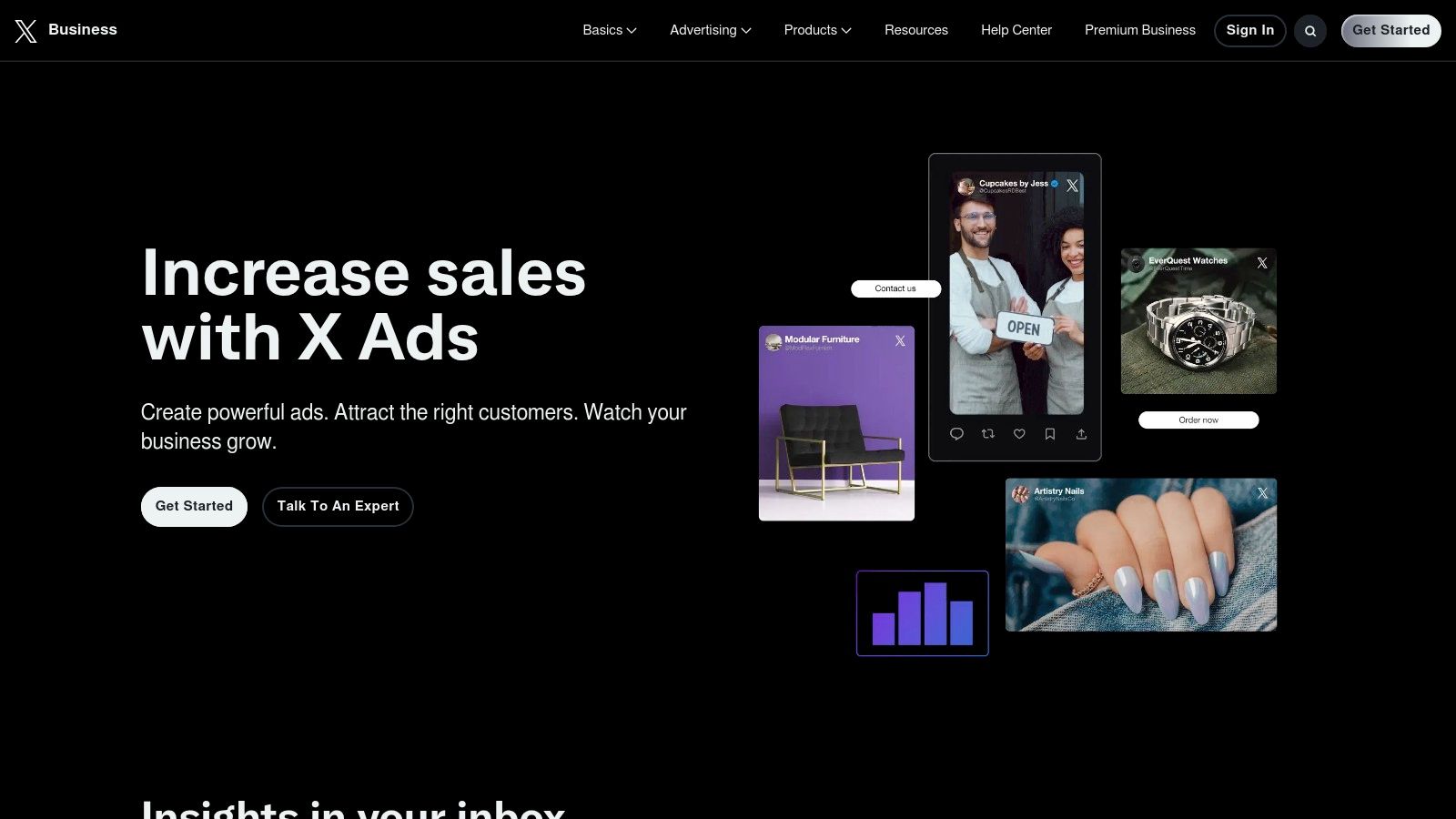
For businesses aiming to tap into real-time conversations, breaking news, and cultural moments, X for Business (formerly Twitter) offers a unique and fast-paced environment. The platform excels at driving public discourse and is an essential tool for brands focused on thought leadership, customer service, and event-based marketing. Its strength lies in connecting with an engaged audience actively seeking immediate information, making it one of the best social media platforms for business in sectors like tech, news, B2B, and entertainment.
X's advertising platform is built for speed and relevance, allowing businesses to inject their message directly into timely conversations. Unlike visually-driven platforms, X prioritizes immediacy and concise messaging, providing an unparalleled opportunity to build brand voice and engage with industry trends as they happen.
Key Features and Capabilities
- Real-Time Ad Targeting: Launch campaigns that target users based on the keywords they use, conversations they engage with, and events they follow in real time.
- Flexible Budgeting and Pacing: Utilize Campaign Budget Optimization to manage spending efficiently across ad groups. Control delivery speed with standard or accelerated pacing to capitalize on short-lived trends.
- Objective-Based Campaigns: Structure campaigns around specific goals, including driving website clicks, increasing video views, gaining followers, promoting app installs, or simply maximizing brand awareness.
- Transparent Controls: Set clear flighting dates and spending caps at the campaign level, providing predictable control over your advertising budget and timeline.
- SMB Ad Credit Opportunities: X periodically offers promotional ad credits to small and medium-sized businesses, lowering the barrier to entry for new advertisers.
Expert Tip: Use "Conversation Targeting" to place your ads in front of users discussing specific TV shows, sporting events, or industry conferences. This allows you to join relevant conversations authentically and reach a highly engaged, self-qualified audience.
Strategic Breakdown
| Aspect | Details |
|---|---|
| Primary Audience | B2B Professionals, Tech-savvy users, Journalists, Media Personalities, Engaged Consumers (Millennials, Gen X) |
| Best For | Real-time marketing, brand announcements, thought leadership, public relations, customer service, driving website traffic from trending topics. |
| Recommended Cadence | Organic: 5-10+ posts/day (high frequency is key). Ads: Continuous for follower growth, flighted for specific events or product launches. |
| Platform Cost & Access | Free to create a business profile. Advertising is pay-per-action (e.g., cost-per-click, cost-per-engagement) with flexible daily budgets. Official minimums are not published, but effective campaigns often start around $20-50/day. |
| Unique Strength | Unmatched ability to engage with live events, breaking news, and cultural conversations in real time, making it ideal for topical and reactive marketing campaigns. |
Pros:
- Strong real-time reach during live events and trending discussions.
- Competitive CPC and CPE benchmarks for many B2B and tech industries.
- Excellent platform for building brand personality and thought leadership.
Cons:
- Brand suitability can be a concern as your ads may appear alongside volatile news cycles.
- Fewer creative ad formats compared to rivals like Meta or TikTok.
- Ad delivery and performance can be inconsistent and highly dependent on trending topics.
Explore the platform: X for Business
Top 7 Social Media Platforms for Business — Comparison
| Tool | 🔄 Implementation complexity | ⚡ Resource requirements | 📊 Expected outcomes | 💡 Ideal use cases | ⭐ Key advantages |
|---|---|---|---|---|---|
| PostSyncer | Low–Medium 🔄: intuitive UI; some advanced AI/video features still maturing | Low ⚡: affordable tiers, monthly AI/video credits, no per‑user fees | Efficient multi‑brand scheduling, faster content ideation/production 📊 | Creators, agencies, marketing teams managing multi‑brand workflows 💡 | AI Content Studio & AI Video Creator; unlimited team members; unified inbox ⭐ |
| Meta for Business (Facebook + Instagram) | Medium 🔄: Ads Manager learning curve; many optimization options | Medium–High ⚡: ad spend, creative assets, analytics resources | Broad reach, strong retargeting and commerce conversions 📊 | B2C, e‑commerce, local SMBs, full‑funnel campaigns 💡 | Enormous reach, mature ad stack, rich placements & reporting ⭐ |
| LinkedIn Marketing Solutions | Medium–High 🔄: campaign structure and precise targeting require setup | High ⚡: higher CPC/CPM; budget for testing and sales/BD follow‑up | High‑quality B2B leads and account‑based impact 📊 | B2B demand gen, enterprise ABM, recruiting and thought leadership 💡 | Precise professional targeting; decision‑maker reach ⭐ |
| TikTok for Business | Medium 🔄: creative testing and trend responsiveness needed | Medium ⚡: frequent creative production; creator partnerships | Strong discovery, high engagement; rapid creative testing results 📊 | DTC discovery, youth‑focused brands, creator‑driven campaigns 💡 | High‑engagement video formats and creator ecosystem ⭐ |
| YouTube Advertising via Google Ads | Medium–High 🔄: video ad formats + Google Ads setup complexity | High ⚡: video production costs and targeting/measurement expertise | Massive video reach; brand lift and direct response measurable 📊 | Brand awareness, long‑form storytelling, performance video ads 💡 | Unmatched video inventory and granular targeting across Google properties ⭐ |
| Pinterest Business | Low–Medium 🔄: Performance+ simplifies setup but options exist | Medium ⚡: visual assets, product catalog and occasional creative work | High‑intent discovery and e‑commerce conversion lift 📊 | Retail, home, fashion, food and seasonal campaigns focused on purchase intent 💡 | Shopping/catalog support and AI‑assisted creative tools ⭐ |
| X for Business (formerly Twitter) | Low–Medium 🔄: straightforward controls; real‑time management needed | Low–Medium ⚡: modest budgets; active monitoring during events | Real‑time reach for launches, cultural moments and traffic spikes 📊 | Product launches, news‑driven promotions, event amplification 💡 | Real‑time conversation reach and competitive CPC/CPE benchmarks ⭐ |
From Platform Selection to Performance: Unifying Your Social Strategy
Navigating the complex landscape of social media is no longer about simply picking a platform and posting content. As we've explored, the journey to finding the best social media platforms for business involves a strategic deep-dive into your specific audience, industry, and overarching goals. The difference between a thriving digital presence and a stagnant one lies in this initial, crucial choice. You wouldn't try to sell high-end B2B software on Pinterest, nor would you launch a visual-first home decor brand exclusively on LinkedIn.
Each platform offers a unique ecosystem with its own culture, content formats, and audience expectations. From the professional networking powerhouse of LinkedIn to the vibrant, trend-driven world of TikTok, your brand must speak the native language of the channel to truly connect. This guide has provided the blueprint for making those informed decisions, equipping you with the demographic data, strategic frameworks, and content-specific insights needed to build a powerful, multi-platform presence.
However, selection is only the first half of the equation. The second, and arguably more challenging, half is execution.
Key Takeaways: From Silos to Synergy
Let's distill the core principles from our platform breakdown into actionable takeaways:
- Audience First, Always: Your target customer's digital habitat dictates your social media real estate. Don't chase vanity metrics on a platform where your ideal client isn't active.
- Goal-Platform Alignment: Are you driving B2B leads? LinkedIn is your primary focus. Building a visually-driven brand community? Instagram and Pinterest are key. Seeking viral reach with a younger demographic? TikTok is your stage. Match the tool to the job.
- Content is Contextual: A single piece of content rarely performs equally across all channels. Adapt your messaging, format (video, image, text), and tone to fit the platform's native environment. A formal case study on LinkedIn becomes a quick, engaging video reel on Instagram.
- Consistency Breeds Trust: An active, consistent presence signals reliability and commitment to your audience. Sporadic posting can erode brand trust and algorithm favorability. This is where management becomes critical.
The Management Challenge: Turning Strategy into Action
Choosing your platforms is the strategic foundation, but managing them effectively is what builds the house. Imagine juggling content calendars, scheduling posts, responding to comments, and analyzing performance metrics across Facebook, Instagram, LinkedIn, and TikTok. The administrative overhead can quickly become a full-time job, pulling you away from high-level strategy and creative development.
This is where the true power of a unified social media management tool comes into play. Instead of logging in and out of multiple apps, a centralized platform like PostSyncer acts as your command center. It transforms a chaotic, multi-channel workflow into a streamlined, efficient process.
Strategic Insight: The goal is not just to be present on multiple platforms; it's to be effective and efficient. A unified management tool eliminates the friction between strategy and execution, allowing you to scale your efforts without scaling your workload.
By integrating your chosen social networks, you can schedule all your content from a single dashboard, leverage AI to optimize posting times for maximum engagement, and view consolidated analytics to understand what’s truly working. This holistic view is essential for making data-driven decisions and proving the ROI of your social media efforts. Pairing your carefully selected platforms with a robust management system is the final step in creating a social media engine that drives tangible business growth.
Ready to unify your social media strategy and transform your workflow? PostSyncer is the all-in-one command center designed to help you manage all the best social media platforms for business from a single, intuitive dashboard. Visit PostSyncer to see how our AI-powered scheduling and analytics can save you time and supercharge your results.