








Landing brand deals is all about proving your worth, and that work starts long before you ever send a single pitch. Brands are making an investment, and they need to see a professional online presence, a well-defined niche, and an engaged community. They want partners who deliver reliable results, not just creators with a big follower count.
Building a Foundation That Attracts Brands
Before you even think about outreach, you need to build a platform that brands actively want to partner with. Your social media profiles are your digital storefront. When a brand manager stops by for a look, what do they see? A disorganized, inconsistent feed signals unreliability. A focused, professional one tells them you're a serious business partner.
The goal here is to shift your focus from vanity metrics. Brands are looking past the follower numbers and vetting your credibility, your consistency, and the actual quality of your content. They aren't just buying access to your audience; they're investing in you.

Defining Your Niche and Audience
One of the biggest mistakes I see creators make is trying to be everything to everyone. The best partnerships are built on alignment. A brand needs to know, without a doubt, that your audience is their target audience.
Think about it from their perspective. A vague profile covering "lifestyle, travel, and tech" is a much harder sell than a profile laser-focused on "sustainable travel gear for solo female adventurers." Specificity is your superpower.
Your niche informs everything:
- Content Pillars: The core topics you hit again and again.
- Audience Demographics: Who your followers really are (age, location, interests).
- Brand Alignment: The types of companies that are a natural fit for your content.
A tight, well-defined niche makes you memorable and massively simplifies a brand's decision. They can see the match instantly, and that's the very first box they need to check.
Curating a Professional and Consistent Feed
In the creator economy, consistency is king. When a brand is considering you for a partnership, you can bet they're scrolling deep into your feed. They're not just looking at your best work; they're assessing your posting frequency and overall quality. An active, predictable schedule shows them you treat this like a real job.
This is where having a solid social media strategy for content creators is non-negotiable. It’s what helps you maintain a steady flow of great posts, which screams reliability to a potential partner. Sporadic posting, clashing visual styles, or low-quality photos are immediate red flags. Your feed needs to tell a cohesive story about who you are and what you stand for.
Key Takeaway: Brands don't just look at your one viral post; they evaluate your entire grid. They need to see a proven track record of dependable, high-quality content before they'll trust you with their campaign budget.
Before you start your outreach, it's a good idea to run a quick audit on your own channels. This checklist covers what brand managers are typically looking for when they vet a creator for the first time.
Brand-Ready Creator Checklist
| Element | What Brands Look For | Action Step |
|---|---|---|
| Professional Bio | A clear, concise summary of your niche and value proposition. | Update your bio on all platforms to clearly state who you are, what you do, and who you serve. |
| High-Quality Visuals | Clean, well-lit, and on-brand photos and videos. | Archive or delete old, low-quality content that doesn't match your current brand aesthetic. |
| Defined Niche | A clear content focus that aligns with specific industries. | Review your last 10-15 posts. Do they tell a cohesive story about your niche? |
| Consistent Posting | An active and predictable content schedule. | Plan your content calendar for the next 2-4 weeks to demonstrate reliability. |
| Audience Engagement | Genuine interaction and conversation in your comments. | Make it a habit to respond to comments and DMs to foster a strong community. |
| Easy Contact Info | A professional email address is clearly visible in your bio. | Add a business email to your bio or link to a contact page on your website. |
Making sure these elements are buttoned up before a brand sees your profile can make all the difference between getting an opportunity and getting ignored.
This need for proven performance is only getting more critical. With 63.8% of brands planning to work with influencers, the market is crowded and becoming more data-driven every day. It's common for B2C companies to spread their budgets wide, with 52% working with 6–10 influencers on a single campaign. At that scale, they have to pick creators whose performance is predictable. A creator who can show consistent engagement across both Instagram and TikTok is a much safer bet than someone with a one-hit wonder.
Crafting a Media Kit and Pitch That Actually Get Noticed
Think of your media kit as your professional resume in the creator economy. It's way more than just a document listing your follower count. When a busy brand manager opens it, they need to instantly grasp your value, who your audience is, and the story you tell.
A killer media kit makes their decision to partner with you feel like a smart, obvious choice. It's your ultimate sales tool, your chance to frame the narrative before they even scroll through your feed. It needs to look sharp and be packed with the right info to prove you're a serious partner, not just another creator in their inbox.

Building Your Essential Media Kit
Let's be real: brand managers are swamped. They don't have time to wade through a cluttered, 10-page document. Your kit has to be concise, professional, and easy to scan. Every single element needs to earn its spot.
Here’s what you absolutely must include:
- A Punchy Bio: This isn't your Instagram bio. It's a tight paragraph that nails down your niche, your mission, and what makes your content different from everyone else's.
- High-Quality Photos: You need a professional headshot and a few of your best lifestyle or content shots that scream "this is my vibe."
- Audience Demographics: This is non-negotiable. Brands need to know who they're reaching. Include solid data on your audience's age, gender, top locations, and interests. The best way to do this? Grab screenshots directly from your platform's analytics to back it all up.
- Key Performance Metrics: Forget vanity metrics. Showcase your average views, reach, and especially your engagement rate. A high engagement rate is way more powerful than a huge follower count because it proves you have a connected community.
- Past Collaborations & Case Studies: Got experience? Flaunt it. Drop the logos of brands you've worked with. Even better, include a short case study with real results, like, "Generated 150,000+ views and a 5.7% engagement rate for Brand X's latest campaign."
Pro Tip: Your media kit isn't just about the numbers; it's about the story those numbers tell. Instead of just listing "85% female audience," frame it as a narrative. Try something like: "My content deeply resonates with a core audience of millennial women (25-34) who are passionate about sustainable living."
Crafting a Pitch That Gets a Response
Okay, your media kit is polished and ready to go. Now comes the pitch. A generic, copy-paste email is the fastest way to land in the trash folder. The whole point is to prove you've done your homework and you genuinely believe this partnership would be a home run.
First, you need to find the right person. A quick search on LinkedIn for a "PR Manager," "Partnerships Lead," or "Marketing Manager" at the company usually does the trick. Your subject line should be clear and to the point—something like, "Collaboration Idea: [Your Channel Name] x [Brand Name]."
When you write the email, stick to a simple, powerful structure:
- The Personalized Hook: Start by showing you're a real fan, not a robot. Mention a specific product you love or a recent campaign of theirs that you thought was brilliant. This instantly separates you from the crowd.
- The "Why It Makes Sense" Statement: This is the heart of your pitch. In just a couple of sentences, connect the dots between their products and your audience's interests. Show them the overlap.
- The Big Idea: Don't be vague. Instead of "I'd love to work together," propose a concrete idea. For example: "I envision creating a YouTube video testing your new hiking boots on a real-world trail, showing my audience of avid outdoor adventurers how durable and comfortable they are."
- The Call to Action: End confidently. Invite them to check out your attached media kit for all the details on your audience and past work, and suggest a quick chat to discuss the idea further.
A Tale of Two Pitches
To see what I mean, here’s a quick breakdown of a pitch that gets ignored versus one that gets a reply.
| Weak Pitch Element | Strong Pitch Element | Why It Works |
|---|---|---|
| "Hi, I'm an influencer..." | "Hi [Contact Name], I'm a huge fan of [Brand Name]'s commitment to sustainable materials..." | Personalization shows you've actually done your research. |
| "...and I'd love to collaborate." | "...my audience of eco-conscious travelers is always looking for durable gear like your new backpack." | It immediately connects their product to your specific audience. |
| "Let me know if you're interested." | "I have an idea for a 'What's In My Bag' video for my upcoming trip that would be a perfect fit. I've attached my media kit." | It offers a specific, creative idea and a clear next step. |
This level of detail is what separates the creators who land dream deals from those who are still sending emails into the void. It proves you understand marketing and you're ready to be a true partner. This approach is a key part of building a powerful creator identity, a topic you can dive deeper into with this complete social media branding guide.
How to Find and Vet the Right Brand Opportunities
Landing just any brand deal isn’t the goal. The real win is landing the right one. Your audience follows you for a reason—they trust your taste and your opinion. That trust is your most valuable asset, and a single misaligned partnership can tarnish it in a heartbeat.
The trick is to stop waiting for opportunities to fall into your lap and start proactively hunting for brands you genuinely believe in. Think about the products you already use and love every single day. Those are your warmest leads because the endorsement is already authentic. A pitch that kicks off with genuine enthusiasm will always land better than a cold, generic one.
To move from one-off deals to a steady stream of income, you need a system. It’s all about learning how to find clients and build a predictable pipeline of brand opportunities. This turns your outreach from a shot in the dark into a reliable business process.
Where to Source Your Next Partnership
The best deals are usually a mix of inbound interest and your own proactive outreach. You can't just sit back and hope the perfect email lands in your inbox. You have to be out there, actively searching for brands that are a perfect fit.
Here are the most effective places I’ve seen creators find gold:
- Influencer Marketing Platforms: Sites like Upfluence, Aspire, and Grin are essentially marketplaces connecting brands and creators. They're a solid starting point, but be prepared for some stiff competition.
- Your Favorite Brands' Social Feeds: Scope out the brands you already love. Who are they working with? Seeing them partner with other creators is a huge green light—it means they have a budget and an interest in influencer marketing. It also gives you a feel for the kind of content they value.
- Niche Networking Events: Don't underestimate the power of a real conversation. Whether it’s a virtual summit or an in-person industry conference, building actual relationships with marketing managers can open doors that a thousand cold emails never could.
The Art of Vetting Potential Brands
Got a list of potential partners? Great. Now the real work starts. This vetting process is absolutely crucial for protecting your own brand and making sure the collaboration is a win for everyone. Don’t get lazy here.
Before you even think about hitting 'send' on a pitch, do a quick background check. A simple Google search can uncover past controversies or negative press that could reflect poorly on you. Read through customer reviews—if their products are flooded with one-star ratings, that’s a massive red flag.
Key Insight: A brand's reputation becomes your reputation the moment you partner with them. A deal with a company known for shady ethics or terrible customer service can alienate your audience, no matter how great your content is.
As you research, dig into their values. Does their marketing message vibe with yours? If you’ve built a community around sustainability, partnering with a fast-fashion brand is going to create some serious friction with your followers. A quick scan of their "About Us" or "Mission" page will usually tell you everything you need to know.
Finally, you have to find the right person to contact. Firing off your pitch to a generic info@brand.com email is the fastest way to get ignored. Hop on LinkedIn and look for titles like "Influencer Marketing Manager," "Brand Partnerships," or "Social Media Manager." Addressing your email to a specific person shows you’ve done your homework and dramatically increases your chance of getting a reply.
Mastering Negotiation, Pricing, and Contracts
Alright, let's talk about the part where your creative hustle meets the bottom line. Knowing your worth is everything when you're trying to land brand deals. This is where the conversations about money and contracts happen, and while it can feel a little intimidating, this is precisely where you lock in the pay you deserve and protect your work.
We’re going to break it all down so you can walk into these talks with total confidence.
First things first: you're not just selling a post. You're selling results. Brands are laser-focused on performance these days. Influencer marketing isn't just a "nice-to-have" anymore; it's a serious performance channel. The global market is projected to hit around $32–$33 billion by 2025 because it works. On average, brands are seeing a return of $5.78–$6.50 for every $1 they spend on creators—a figure that leaves a lot of traditional digital ads in the dust. This ROI-driven thinking means creators who can actually prove their value are the ones getting the contracts. You can find more on the 2025 influencer marketing landscape on PR Newswire.
Setting Your Rates With Confidence
One of the biggest questions I hear is, "What should I actually charge?" There's no single magic number, but you can build a solid pricing structure that makes perfect sense. Don't just pull a number out of thin air. Instead, start with a baseline that considers a few key pieces of the puzzle.
Your formula should be a mix of:
- Audience Size & Reach: This is the simplest metric—how many people you can get a brand's message in front of.
- Engagement Rate: Honestly, this is your golden ticket. A 5% engagement rate on an account with 20,000 followers is way more valuable than a 0.5% rate on an account with 200,000. It proves your audience is actually listening.
- Scope of Work: What exactly are you making? A single Instagram post is priced very differently than a full package that includes a YouTube video, three TikToks, and a gallery of high-res photos.
- Production Costs: Don't forget to factor in your time, gear, travel, props, or any other expenses you'll incur to bring the content to life.
And a pro tip: once you start earning, look into the business side of things, like exploring self-employed tax benefits in Canada if you're based there. Thinking about the whole financial picture from the start will save you headaches later.
Common Pricing Models
Brands and creators typically stick to a few standard ways of structuring payment. Knowing these helps you figure out what makes the most sense for any given project.
| Pricing Model | How It Works | Best For |
|---|---|---|
| Flat Fee | A fixed price for a specific set of deliverables. Simple and straightforward. | This is the most common model and the most predictable for creators. It’s perfect for clearly defined campaigns, like a single review video or a set of Instagram posts. |
| Performance-Based | Your payment is tied directly to results, like clicks, sales, or sign-ups (think commission). | High-risk, high-reward. This can be great if you have a super-engaged audience and you’re confident you can drive conversions for the brand. |
| Hybrid Model | A mix of both worlds: a smaller guaranteed flat fee plus a bonus based on performance. | This is a fantastic middle ground. It guarantees you get paid for your work while still giving you the chance to earn more if the campaign really takes off. |
When a brand asks for your rates, don't just send a number. Frame it as a value package. For instance: "For a dedicated YouTube review, which includes one vertical Reel for social promotion and five high-res photos for your marketing use, my rate is $1,800." It sounds professional and shows you’re thinking about their bigger marketing goals.
Decoding the Brand Deal Contract
I can't stress this enough: never, ever start work without a signed contract. This piece of paper is your safety net. It lays out all the expectations for both you and the brand, preventing any "he said, she said" drama down the line and making sure you actually get paid on time.
Key Takeaway: A contract isn't just a formality; it's the official rulebook for your collaboration. Reading it carefully is one of the most important business activities you'll perform as a creator.
It might look like a wall of legal jargon, but you just need to focus on a few key clauses to protect yourself.
Here's what to look for:
- Scope of Work & Deliverables: This needs to be crystal clear. It should list exactly what you're creating (e.g., "one 60-second Instagram Reel," "three static feed posts"). If you see vague terms like "social media promotion," that's a red flag. Pin them down on the specifics.
- Usage Rights: This defines how, where, and for how long the brand can use your content. Can they only use it on their own social media? Or can they run it as a paid ad? Be wary of the word "perpetuity"—it means forever. If they want broad or long-term usage rights, you should be charging more for it.
- Payment Schedule: This should clearly state the total fee, how you'll be paid, and when you'll be paid. Net-30 (payment within 30 days of invoicing) is pretty standard. Some bigger companies might try to push for Net-60 or even Net-90, so be prepared to negotiate that.
- Exclusivity Clause: This is the part that might prevent you from working with competing brands for a set period. Make sure the timeline is reasonable and that the definition of a "competitor" is specific. You don't want to be locked out of an entire industry for six months.
Getting a handle on these contract basics is crucial. In the same way, it’s just as important to understand how to measure social media ROI. The more you know about the results you can deliver, the more power you have in your next negotiation.
Delivering Flawless Campaigns That Earn Repeat Business
Landing a brand deal is a huge win. But the real victory? Turning that one project into a long-term partnership.
The difference between a one-off gig and becoming a brand’s go-to creator often comes down to one thing: execution. A messy, disorganized process screams unreliability. A smooth, professional workflow, on the other hand, proves you’re a partner they can trust with their budget again and again.
This is where you stop being just a creator and start thinking like a project manager. A successful campaign hinges on clear communication, hitting deadlines, and delivering content that doesn’t just meet expectations—it exceeds them. It’s about managing every single step with precision.
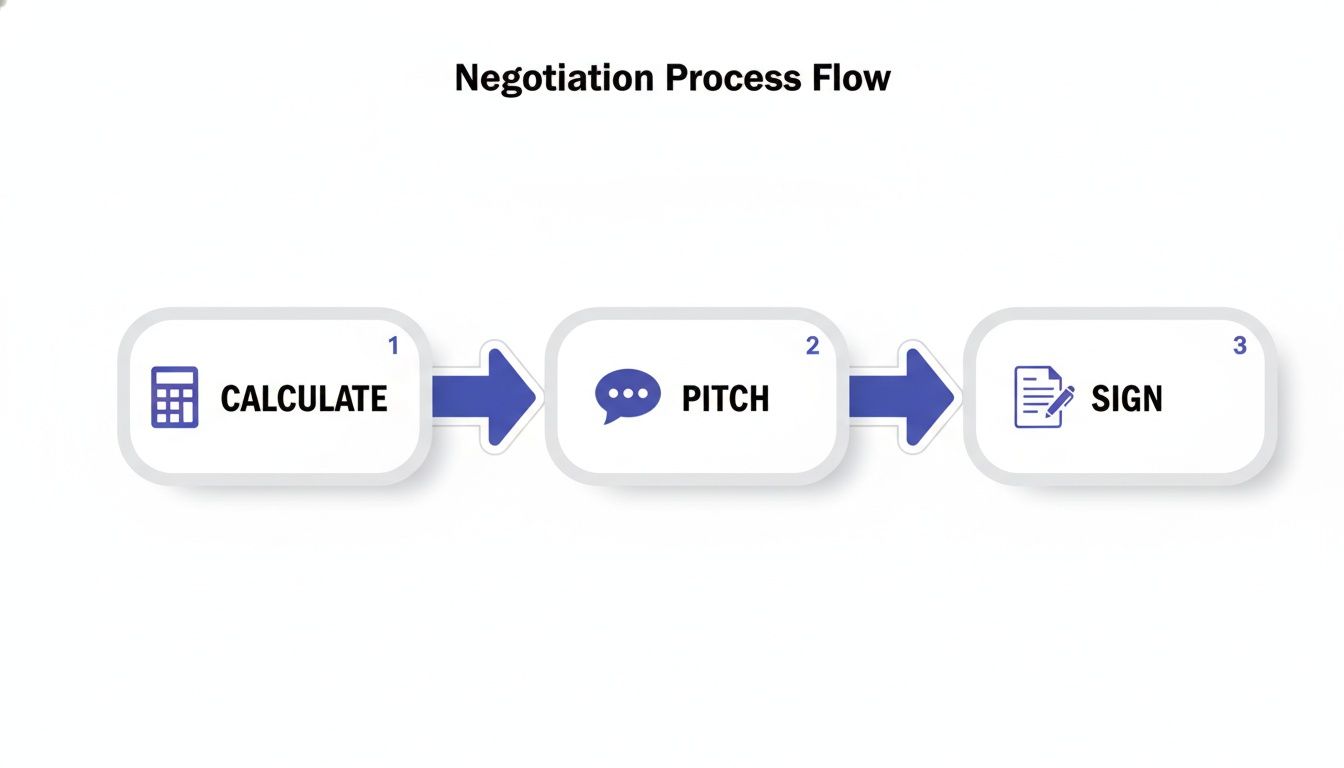
This process isn't a guess; it's a structured path that sets the stage for a well-organized and successful campaign from the get-go.
Building a Repeatable Campaign Workflow
In this game, consistency is your superpower. A repeatable workflow takes the guesswork out of campaign management and ensures nothing important slips through the cracks. It all starts with creating a central hub for all communication and assets, pulling conversations out of chaotic email threads and into one organized space.
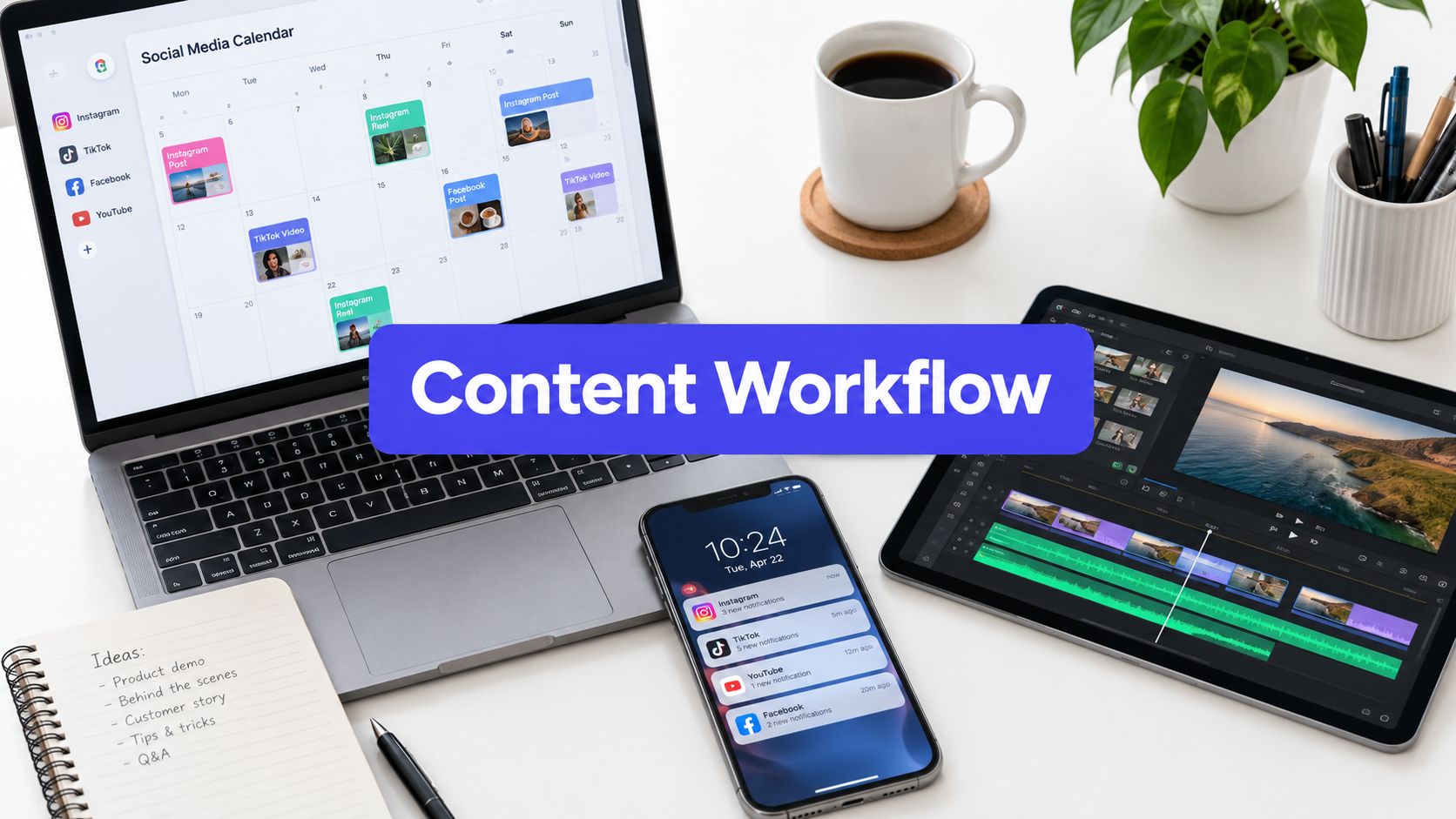
This is where a dedicated social media management tool is an absolute game-changer. Platforms like PostSyncer let you build a shared workspace where you and the brand can see everything in one place. Think of a simple calendar where they can view scheduled posts, a media library holding all approved assets, and a single channel for feedback. This level of organization instantly makes you look like a pro.
A solid workflow should always include these key stages:
- Onboarding & Kickoff: A quick call to align on goals, key messaging, and the timeline.
- Content Creation: Getting down to business and producing the photos, videos, and copy you agreed on.
- Draft Submission & Feedback: Sharing the first drafts in your shared workspace for the brand to review.
- Final Approvals: Getting the official green light on all content before it goes live.
- Scheduling & Publishing: Using a scheduler to push content live at the perfect time for maximum engagement.
This simple structure keeps everyone on the same page and the project moving forward smoothly. The table below breaks down what this looks like in practice.
Campaign Workflow From Start to Finish
| Campaign Stage | Key Action | PostSyncer Feature |
|---|---|---|
| Kickoff & Onboarding | Finalize contract, agree on goals, timeline, and key messaging. | Shared Workspace: Keep all campaign briefs and notes in one place. |
| Content Creation | Produce all deliverables (videos, images, copy). | Media Library: Upload and organize all assets for easy access. |
| Draft Submission | Send drafts to the brand for their initial review. | Direct Sharing Links: Send secure, private links for review without email attachments. |
| Feedback & Revisions | The brand provides feedback and you make necessary edits. | Unified Comments: Brand managers can leave feedback directly on the content drafts. |
| Final Approval | Get the final sign-off from the brand on all content. | Approval Status: Clearly mark content as "Approved" so everyone knows what's ready to go. |
| Scheduling | Schedule all approved posts for their go-live dates. | Content Calendar: Drag and drop approved content onto the calendar for easy scheduling. |
| Publishing | Content goes live on all specified platforms. | Automated Publishing: Posts go live automatically at the scheduled time. |
| Reporting | Track performance and compile a wrap-up report. | Analytics Dashboard: Pull key metrics and generate reports to prove campaign ROI. |
Following a clear workflow like this not only keeps you sane but also shows the brand they’re working with a true professional.
Navigating Brand Approvals Seamlessly
The approval process can either be a quick checkpoint or a massive bottleneck. Your goal is to make it incredibly easy for the brand to give you feedback. Instead of endless email chains with attached files, a centralized system lets them comment directly on your drafts.
Pro Tip: When you send drafts for review, be specific. Don't just ask, "What do you think?" Instead, guide their feedback by asking something like, "Does this caption hit the key benefit we talked about?" This leads to much faster and more useful revisions.
This approach saves everyone time and avoids the confusion of tracking feedback across multiple emails. When you respect the brand manager's time, you become someone they want to work with again.
Tracking Performance and Proving Your Value
Your job isn't done when the post goes live. The last—and arguably most important—step is tracking campaign performance and delivering a solid wrap-up report. This report is your proof of ROI and your single best tool for landing the next deal.
Don’t just send over a few screenshots of likes and comments. A professional report is a clean, data-driven summary that clearly shows the campaign's success.
Make sure your report always includes:
- Key Performance Indicators (KPIs): Focus on the numbers that matter to the brand, like reach, impressions, engagement rate, link clicks, and video view-through rate.
- Audience Demographics: Remind them of the valuable audience you reached.
- Top-Performing Content: Showcase which posts hit a home run with your audience.
- Audience Feedback: Include screenshots of positive comments or glowing testimonials from your community.
This final step is what separates the amateurs from the pros. By delivering a report that proves the value you provided, you’re not just ending a campaign—you’re starting the conversation for the next one. You've closed the loop and made it an easy "yes" for them to hire you again.
Got Questions About Landing Brand Deals? We’ve Got Answers.
Diving into brand partnerships can feel like you’re learning a whole new language. You’ve done the hard work—building your audience, creating your pitch—but those nagging practical questions always seem to pop up. Let’s get them sorted out with some straight, no-fluff answers.
Think of this as your go-to guide for handling those tricky situations every creator runs into, from figuring out your worth to managing brand relationships like a seasoned pro.
How Many Followers Do I Really Need?
This is, without a doubt, the question I hear most often. And the answer is probably a lot fewer than you think.
There’s no magic number. In recent years, brands have wised up and shifted their focus from massive follower counts to engagement rates and niche alignment. A creator with 5,000 super-engaged followers in a targeted niche is often way more valuable than someone with 50,000 who are barely paying attention.
What brands are really after is a genuine connection. They want to partner with creators whose audience actually trusts them and takes action based on their recommendations. This is exactly why micro-influencers (10,000 to 100,000 followers) and even nano-influencers (1,000 to 10,000) are landing major deals.
So, stop obsessing over the follower count and focus on building a strong, interactive community first. If your audience is active, responsive, and passionate about your niche, you’re ready to start pitching.
Gifted vs. Paid: What’s the Real Difference?
It is absolutely crucial to know the difference between a "gifted" collab and a paid partnership. They are not the same thing, and confusing them can seriously undervalue your work.
- Gifted Collabs: The brand sends you a product for free. They hope you’ll post about it, but there's no contract forcing you to. It's basically a product-for-publicity swap. This can be a decent way to build a portfolio when you're just starting, but let's be real—it doesn't pay the bills.
- Paid Partnerships: This is a business deal, plain and simple. You're being paid actual money for your creative services, your time, and the access you provide to your audience. There's a contract, and there are specific deliverables you have to create.
Here's a classic mistake: accepting a "gift" in exchange for guaranteed posts. Your content creation, production time, and audience reach are professional services. If a brand gives you a creative brief, requires specific deliverables, or asks for usage rights, it’s a paid job. Period.
What Do I Do with Negative Brand Feedback?
Look, getting critical feedback is never fun, but it’s a totally normal part of any creative business. The trick is to handle it professionally and not take it personally. When a brand sends notes or asks for revisions, just take a breath before you hit reply.
First, make sure you actually understand what they're asking for. If their notes are vague, don't be afraid to ask for more detail. For instance, if they say a video "doesn't feel on-brand," a great response is, "Could you point to a specific part that feels off, or maybe share an example of the tone you were hoping for?"
Next, try to see the feedback as a team effort. The brand knows its messaging inside and out. Your job is to blend their goals with your unique style. Make the changes they asked for quickly and professionally. It shows you’re a flexible, reliable partner, which is a huge reason brands come back for more.
How to Follow Up Without Being Annoying
You sent out an amazing pitch and now you're hearing... crickets. The follow-up is a delicate dance. You need to stay on their radar without becoming that person in their inbox. My go-to is the "one-week, one-line" strategy.
Give it about 5-7 business days after your first email. Then, send a super short, polite follow-up. Don't re-pitch your whole idea. Just reply directly to your original email with something simple:
"Hi [Contact Name], just wanted to gently bump this in your inbox to make sure you saw it. Let me know if you have any questions!"
It’s professional, it respects their time, and it pops your original message right back to the top of their inbox. If you still don’t hear anything after that, it's probably time to let it go. Their silence is an answer, and your energy is better spent chasing the next opportunity.
Tired of juggling brand deals through chaotic email threads and messy spreadsheets? PostSyncer brings your entire campaign workflow into one place. Handle content approvals, scheduling, analytics, and reporting like a pro, and become the organized, reliable partner brands can't wait to rehire. Streamline your process and get back to what you do best—creating amazing content. Start your free trial at PostSyncer.com.