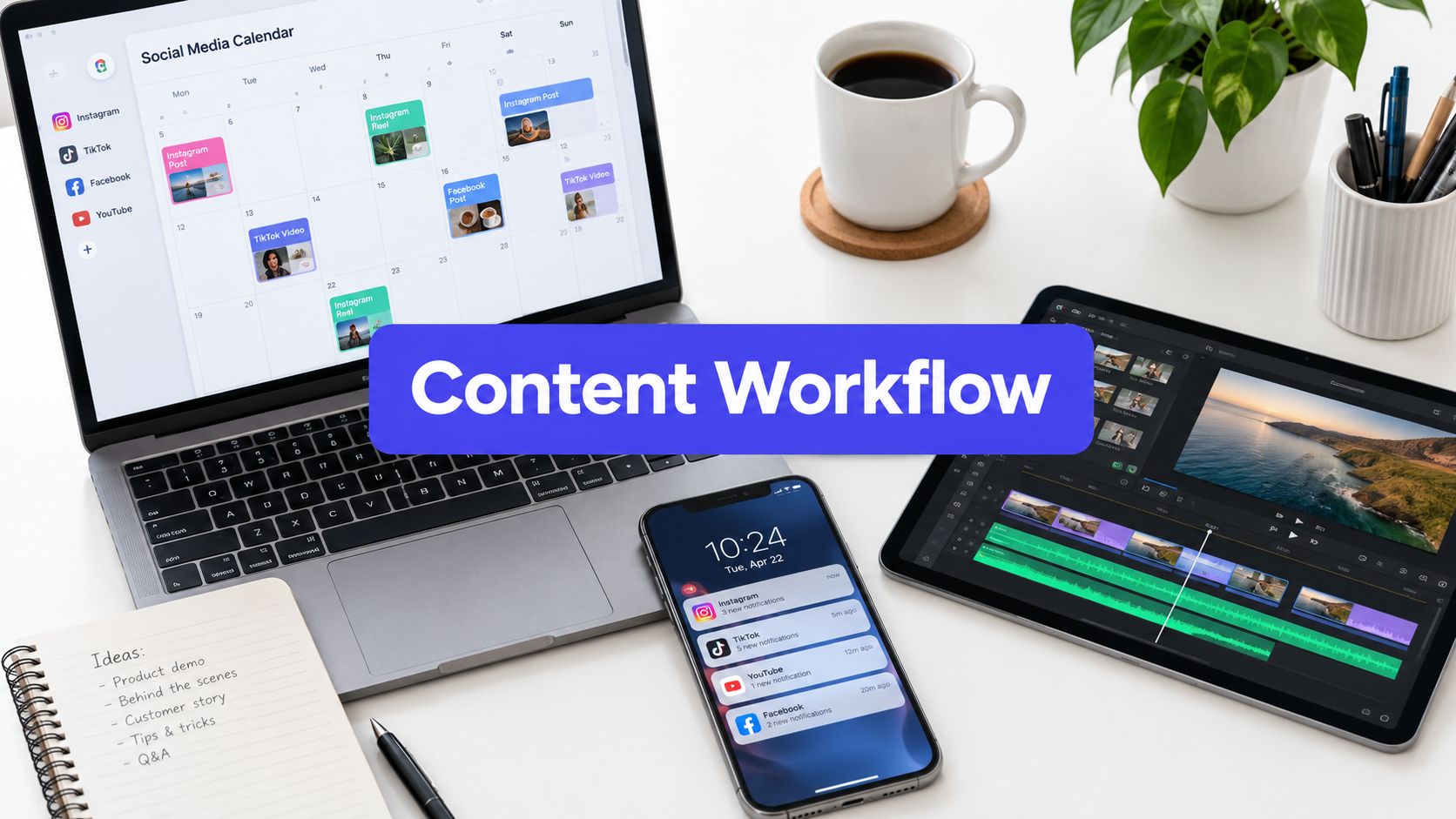










Let's be honest, the idea of managing social media can feel overwhelming. It often starts as a chaotic, time-sucking mess of random posts and forgotten passwords. But when you get it right, it transforms that chaos into a powerful, data-driven strategy. A structured approach sharpens your brand voice, boosts audience engagement, and delivers a real return on your effort, turning your social channels from a daily chore into a growth engine.
The Real Cost of Unmanaged Social Media

Before we talk solutions, let's look at the all-too-common reality of social media without a system. Picture a kitchen full of talented chefs, but with no head chef calling the shots. There's a lot of activity, a lot of noise, but the final dishes are inconsistent and often disappointing. That's unmanaged social media in a nutshell.
This haphazard approach almost always leads to the same frustrating problems that kill growth and waste precious time and money. Without a central plan, teams usually run into:
- Sporadic Posting Schedules: Content goes out whenever someone remembers, completely missing the moments when your audience is actually online and listening.
- A Fragmented Brand Voice: One person is all-business, another is cracking jokes. This inconsistency confuses your followers and makes your brand feel unreliable.
- Missed Customer Conversations: Crucial comments, DMs, and mentions disappear into the void. This isn't just bad service; it’s a recipe for a damaged reputation.
- Inability to Prove Value: Without proper tracking, you can't show how your social media efforts are actually helping the business. Good luck getting that budget approved next quarter.
The Opportunity Cost of Inaction
The stakes have never been higher. We're talking over 5.66 billion people scrolling through social media feeds. Brands that get their management in order aren't just showing up; they're dominating. In fact, a whopping 90% of marketers see a major increase in brand visibility directly from their social efforts. These platforms are absolute goldmines for exposure.
The real magic, though, goes beyond just being seen. Customers who engage with a brand on social media end up spending 35-40% more with them. Why? Because solid management builds real-time connections that create lasting trust and loyalty.
This makes it crystal clear: a structured approach isn't a "nice-to-have" anymore. It's an absolute necessity for any business that wants to thrive. The alternative is a constant cycle of wasted hours, reputational risk, and a never-ending battle to prove social media’s worth. For more on the current digital landscape, check out We Are Social's comprehensive report.
1. Streamline Your Workflow and Reclaim Your Time
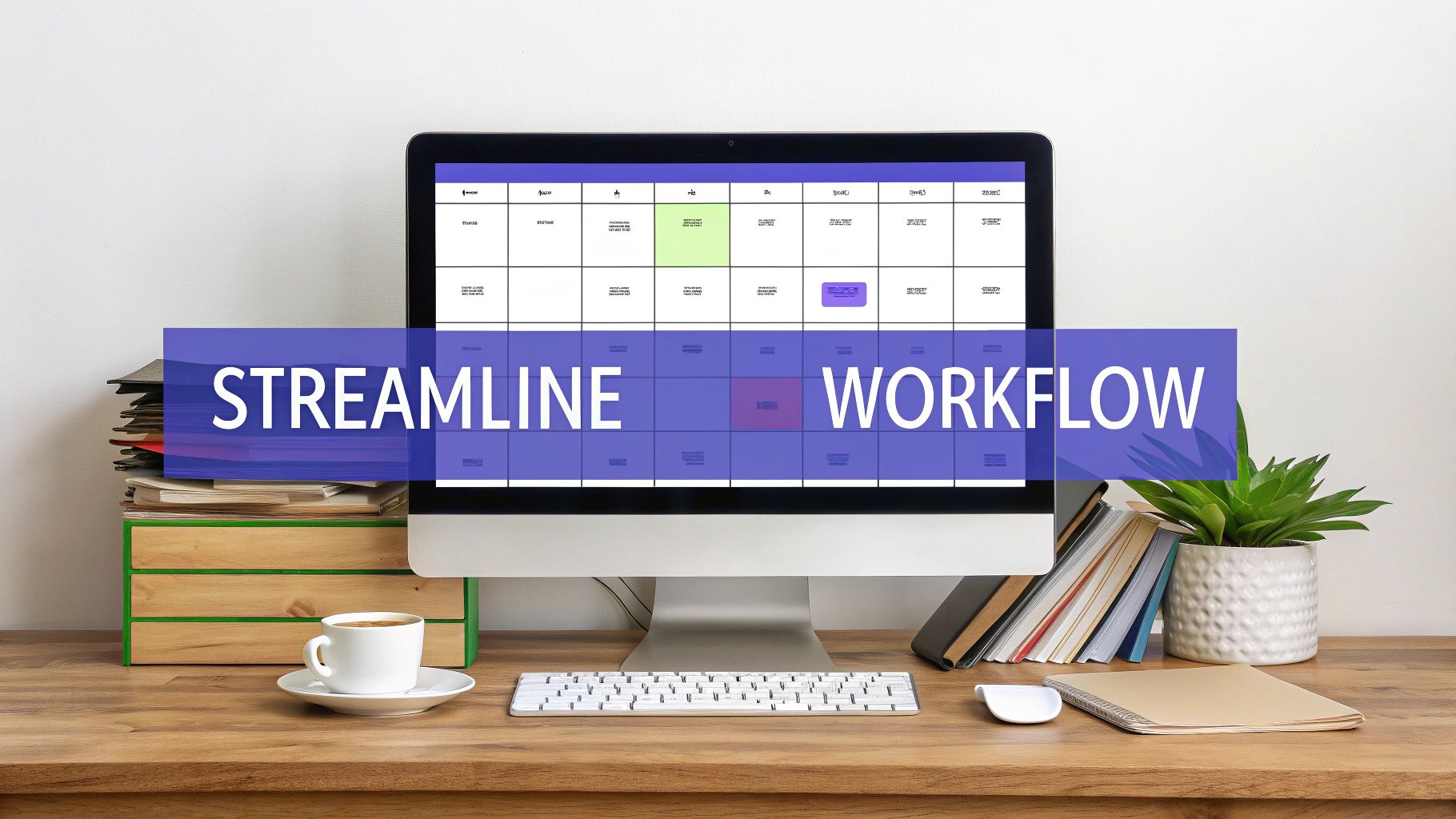
Let’s start with the most immediate, tangible benefit you'll feel: a massive boost in efficiency.
Think of it like this: trying to manage social media manually is like working at a desk buried under piles of scattered papers. A social media management platform is the clean, organized workspace where everything has its place. It turns a collection of scattered, time-sucking tasks into one smooth, centralized operation.
Instead of constantly logging in and out of different accounts or digging through folders to find the right image, everything you need is right there. Imagine having a single media library with every approved photo and video ready to go. That simple change alone can give you back hours every single week.
Centralize All Your Planning and Execution
The heart of this newfound efficiency is the visual content calendar. This isn't just a basic scheduler; it's the command center for your entire content strategy. Your team can plan, create, and schedule every post for every profile from one drag-and-drop dashboard.
This unified view brings incredible clarity and lets you plan ahead. For a busy marketing agency, this means juggling multiple client accounts without the usual chaos of spreadsheets and endless email chains. For a solo creator, it translates directly into more time to actually create great content instead of getting stuck in the weeds of publishing logistics.
To really understand the difference, here’s a quick look at how daily tasks change.
Manual vs. Managed Workflow Comparison
| Task | Manual Process (Without a Platform) | Managed Process (With a Platform) |
|---|---|---|
| Daily Posting | Log in to each platform individually. Copy/paste content and upload assets for each post. Repeat multiple times a day. | Schedule all posts for the day, week, or month in one session. The platform handles the rest. |
| Content Planning | Use spreadsheets, documents, or calendars that are disconnected from the actual publishing process. | Plan and visualize all content in a single, interactive calendar. Drag and drop to reschedule. |
| Asset Management | Search for images/videos in various folders (e.g., Google Drive, Dropbox, local computer). | Access a centralized media library directly within the scheduling tool. |
| Team Collaboration | Communicate edits and approvals via email, Slack, or other external tools. High risk of miscommunication. | Leave comments, assign tasks, and manage approval workflows directly on the content drafts. |
The contrast is pretty stark. One path is filled with repetitive, manual steps, while the other is built for speed and focus.
The real goal here is to shift from reactive, last-minute posting to proactive, strategic planning. A tool like PostSyncer lets you batch-create and schedule weeks—or even months—of content in a single afternoon. That's a game-changer.
Automate to Accelerate Your Growth
If the calendar is the command center, automation is the engine that powers it all.
Manual posting isn’t just slow; it’s a major bottleneck that prevents you from scaling. By automating the publishing process, you guarantee your content goes live at the perfect time for each platform’s audience, maximizing its reach without you having to constantly watch the clock.
If you want to go deeper on this, our guide on how to automate social media posting is packed with practical strategies.
Ultimately, effective social media management gives you back your most valuable resource: time. That reclaimed time becomes a strategic asset, freeing up your team to focus on what actually moves the needle—building community, analyzing what works, and creating content that your audience loves.
Build a Consistent and Powerful Brand Voice
Think about the brands you trust. Chances are, they feel familiar and reliable. That's no accident. Consistency is the foundation of a strong brand. If your posts are witty and casual one day but buttoned-up and corporate the next, you’re not building a brand—you're creating confusion. A unified voice makes your business instantly recognizable and turns casual followers into loyal fans.
This is where social media management really proves its worth. It acts as a guardian for your brand identity, making sure every post, reply, and message hits the exact same note. Without a central hub to manage it all, keeping that voice consistent is a real challenge, especially as your team gets bigger.
Safeguarding Your Brand Identity
Imagine having a single source of truth for your entire social media presence. That’s what a good management platform provides, giving you tools that bake your brand guidelines right into the workflow. Think of it as a quality control checkpoint for your content before it ever sees the light of day.
This system is your best defense against the common, yet damaging, mistakes that can chip away at brand trust, such as:
- Mixed Messaging: Different team members using conflicting tones or phrases.
- Off-Brand Visuals: Accidentally using an old logo, the wrong color palette, or unapproved images.
- Rogue Posts: Content going live that hasn't been properly vetted or signed off on.
By setting up simple approval workflows, every piece of content can get a final look from a manager or client before it’s published. This one step removes the guesswork and guarantees every post is polished, professional, and perfectly on-brand.
A consistent brand presentation across all platforms can increase revenue by up to 33%. This isn't just about looking good; it's about building the kind of reliability that directly impacts your bottom line.
Managing Multiple Brands with Precision
This level of control becomes absolutely critical for marketing agencies juggling several client accounts or for larger companies managing a portfolio of different brands. Each brand has its own unique voice, audience, and goals. A management tool lets you create separate, dedicated workspaces for each one.
Inside each workspace, you can store brand-specific assets, set up unique approval chains, and fine-tune content strategies without any risk of wires getting crossed. This clean separation ensures a post meant for a fun e-commerce client never accidentally lands on the feed of a serious B2B tech firm. If you're looking to really nail this down, our complete social media branding guide goes into even more detail.
At the end of the day, this structured approach ensures every brand’s voice stays distinct and powerful, reinforcing customer loyalty with every single post.
Boost Engagement and Expand Your Reach
Let’s be real: true engagement isn't just about racking up likes and follows. It's about building a living, breathing community around your brand—turning people who just scroll by into genuine, loyal fans. This all starts with one simple thing: showing up when your audience is actually listening.
This is where smart tools completely change the game. Instead of throwing content out there and hoping for the best, an AI-powered scheduler like PostSyncer gets to work analyzing when your audience is most active. It automatically pushes your content live at the exact moment it's most likely to get noticed and drive interaction. By letting the tech handle the "when," your team can pour all their energy into crafting content that truly connects.
This kind of strategic timing is what fuels higher organic reach, putting your message in front of more of the right people. It’s the classic "work smarter, not harder" approach, but for making social media algorithms work for you.
Nurturing Your Community with Speed and Care
Beyond just posting at the right time, real engagement is built in the replies and DMs. A unified social inbox is a non-negotiable here. It pulls all your comments, messages, and brand mentions from every single platform into one clean, manageable feed. This setup makes it nearly impossible for a customer question to slip through the cracks or a glowing comment to go unappreciated.
When you respond quickly and personally, you make your audience feel seen and valued, which is the bedrock of trust. This rapid-fire interaction builds a powerful sense of community and doubles as top-notch customer service, turning your social channels into a support hub people can actually rely on.
An engaged community is one of your most powerful business assets. When you're actively managing conversations, you aren't just answering questions—you're building relationships that create die-hard fans and advocates for your brand.
Turning Reach into Real Results
Growing your reach is what fuels growth, and the numbers don't lie. A 2024 report found that 78% of marketers confirmed social media is a major driver for brand exposure and measurable website traffic. With the number of global social media users climbing by 4.8% annually, a platform like PostSyncer helps you turn those massive numbers into actual revenue by showing you what content is hitting the mark. For a deeper dive into these trends, you can explore why social media marketing is more important than ever in 2026.
To really get the most out of your efforts, you need to be following proven social media marketing best practices. This means blending smart scheduling with authentic, human-to-human community management. At the end of the day, a strategic approach to social media doesn’t just get you noticed—it gets you remembered, trusted, and picked over everyone else.
Unlock Data-Driven Growth and Measure Your ROI
This is where everything clicks. It’s the moment your social media efforts stop being just a daily to-do and start becoming a serious business driver. Without data, you’re flying blind, creating content based on a gut feeling and hoping for the best. A solid management platform completely flips that script.
Instead of guessing what works, you’ll know. Suddenly, your strategy becomes a data-backed operation where every single post, campaign, and decision is intentional and, most importantly, measurable.
From Vanity Metrics to Valuable Insights
It's so easy to get hung up on likes and follower counts. While they feel good, real growth comes from digging deeper into the numbers that actually move the needle for your business. A platform like PostSyncer gives you a central command center to track the entire customer journey, from the first time someone sees your post to the moment they make a purchase.
This means you can finally get a clear picture of the metrics that matter:
- Engagement Rates: Pinpoint which content formats really connect with your audience.
- Click-Through Rates (CTR): See how many people are actually clicking your links and visiting your website.
- Audience Growth: Understand what content fuels community growth and attracts new followers.
- Conversions: Directly connect your social media activity to leads, sign-ups, and sales.
Getting this level of detail is how you prove the real, tangible value of your social media program. To truly understand the impact, you need a handle on concepts like multi-touch attribution, which gives credit to all the touchpoints a customer has along their journey.
The ability to connect social media activity to bottom-line results is the ultimate benefit of social media management. It allows you to move conversations with stakeholders from "we think this is working" to "we know this drove X% in revenue."
Sharpen Your Strategy with Competitive Analysis
Knowing how your own content is doing is only half the battle. To really get an edge, you have to know what your competitors are up to. Social media management tools come with powerful competitive analysis features that let you benchmark your performance against others in your space.
You can see what’s working for them, identify gaps in their content strategy, and spot opportunities to do something different and better. This intel is absolute gold for refining your own content, discovering new audience segments, and making strategic moves that put you ahead. If you really want to get into the weeds, we have a complete guide on how to calculate your ROI on social media.
By using features like campaign tagging in PostSyncer, you can isolate the performance of specific initiatives. This lets you measure the exact ROI of a product launch or a holiday promo, empowering you to double down on what works and confidently show the direct business impact of your efforts.
How a Smart Platform Ties It All Together
Knowing the benefits of social media management is a great start, but the real magic happens when you see them working in concert within a single, intelligent platform. Think of these benefits less like separate features and more like gears in a well-oiled machine. A platform like PostSyncer is the engine that connects everything, turning individual tasks into a powerful, goal-driven strategy.
Each benefit we've talked about is brought to life by specific tools built to solve a real-world problem. It’s a simple cause-and-effect relationship where the right feature delivers a tangible result.
- For Workflow Efficiency: A drag-and-drop content calendar and a central cloud library mean you can stop the frantic search for assets and end the chaos of last-minute posting.
- For Brand Consistency: Collaborative workspaces and clear approval flows ensure every post gets a second look, guaranteeing a unified and professional brand voice.
- For Data-Driven Growth: An integrated analytics dashboard transforms raw numbers into clear insights, showing you exactly what’s driving real ROI.
Making It Work for You, No Matter Your Role
The real power of a centralized platform is its ability to adapt. It offers specific solutions for the unique challenges different people face.
A busy digital marketing agency, for instance, can use multi-brand workspaces in PostSyncer to juggle a dozen client accounts without anything getting mixed up. Each client gets their own dedicated space with unique assets, branding rules, and approval processes. This keeps everything organized and precise, a must-have for any agency looking to scale.
On the other hand, a solo content creator might lean on the AI Content Studio to break through creative block. They can brainstorm post ideas, write a few captions, and schedule out an entire week of content in a single afternoon. This frees them up to do what they do best—create amazing content and connect with their community.
A growing e-commerce brand can put the analytics dashboard to work tracking a new product launch. By tagging all related posts, they can instantly see how the campaign is performing, measure click-throughs to their store, and directly connect their social media efforts to actual sales.
At the end of the day, a smart platform doesn’t just give you a list of features; it delivers solutions. It connects the dots between your daily to-do list and your biggest business goals, creating a streamlined system where every tool has a clear purpose. That integration is what turns social media from a daily chore into a predictable engine for growth.
Frequently Asked Questions
When you're looking at the big picture of social media management, a few common questions always seem to pop up. We've gathered the ones we hear most often to give you clear, straightforward answers that connect the strategy to real-world results.
This diagram breaks down how a central platform acts as the command center for your entire social strategy—orchestrating your workflow, building trust through consistency, and feeding data back into your plan.
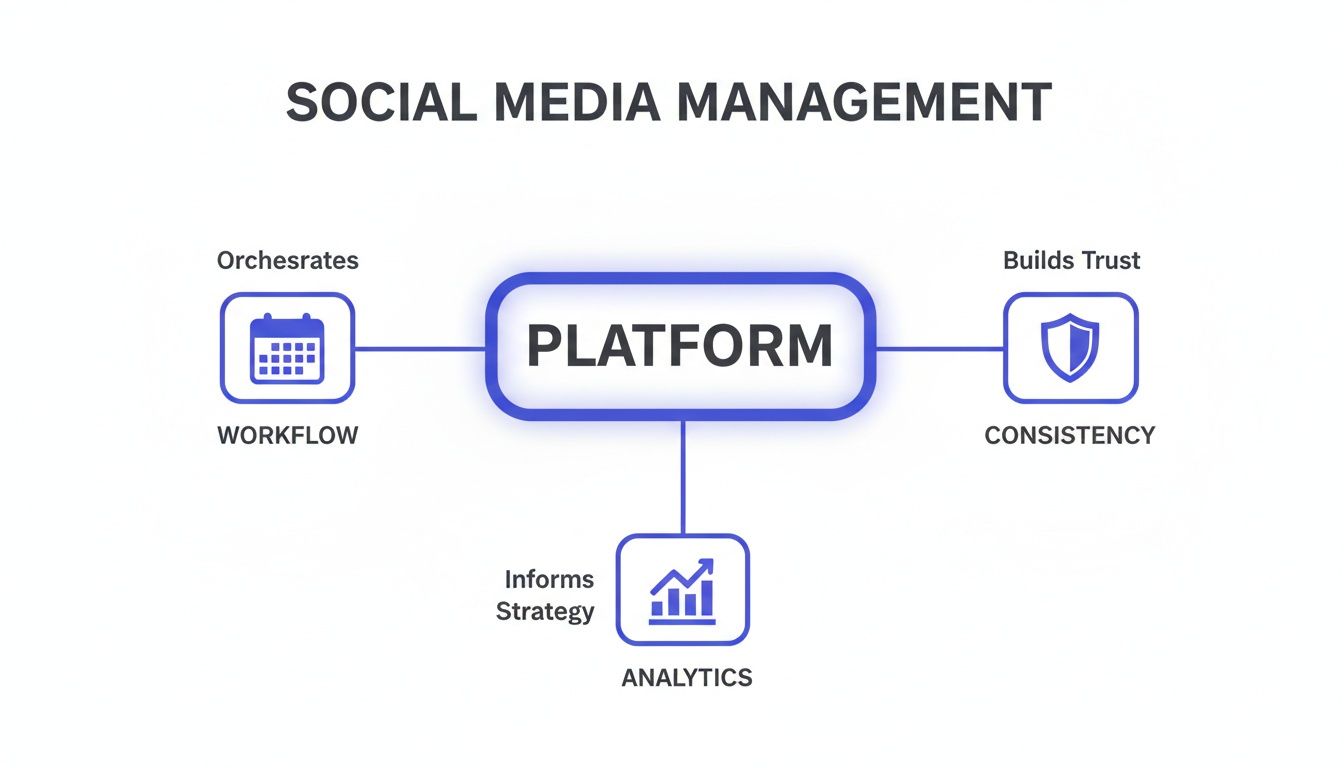
As you can see, a single tool coordinates everything from scheduling to analysis, making sure every move is both intentional and effective.
How Much Time Does Social Media Management Really Save?
Honestly, the time savings can be massive—we're talking several hours freed up every single week. Think about the daily grind: logging into multiple platforms, uploading the same assets over and over, and manually hitting "post." For many businesses, that's easily 1-3 hours per day.
A good management tool rolls all of that into one simple workflow. You can schedule an entire week's worth of content in a single session, cutting that daily time suck down to just a couple of hours for the whole week. It lets you shift your energy from tedious manual tasks to thinking about the bigger picture.
What Is the First Step to Better Management?
Start with a simple audit. Before you even think about signing up for a tool, figure out where your audience actually lives. Which platforms matter most? Once you know that, sketch out a basic content calendar—even a simple spreadsheet will do.
This first step is crucial because it forces you to think ahead and build a routine. Once you have a plan, bringing in a platform to automate it feels like a natural next step, not another overwhelming task. It’s all about building the right habits first.
Can Small Businesses Really Benefit from These Tools?
Absolutely. It's a common misconception that these platforms are only for large corporations juggling multiple brands. While they're great for that, small businesses get a huge lift from the efficiency and polish these tools provide.
A solo entrepreneur or a small team can project the image of a much larger, more organized brand just by maintaining a consistent posting schedule and a professional voice. It's a powerful force multiplier, letting you compete more effectively by automating the work that would otherwise require another hire.
Ready to trade social media chaos for a streamlined growth engine? PostSyncer gives you everything you need to save time, build your brand, and actually prove your ROI—from an AI-powered content calendar to clear, in-depth analytics.
See the difference for yourself. Start your free 7-day PostSyncer trial today.