










You've probably done this already. You opened X, stared at the empty profile fields, watched a few fast-moving posts fly by, and thought, “Am I late to this?”
You're not late. But you are joining a platform that feels different from the version people still describe in old Twitter tutorials.
That mismatch is what trips up most beginners. They expect a simple text-first network where posting often is enough. What they find instead is a noisier, less predictable platform where reach, conversation, video, long-form posts, and feed curation all matter more than they used to. If you're new to twitter in 2026, the best move isn't trying to copy advice from years ago. It's learning how the platform behaves now, then building habits that fit the current environment.
Welcome to X (Twitter) in 2026
X is still one of the biggest places to join public conversations, track news, and build authority fast. But it's not an easy platform by default.
The platform went through major volatility after the 2022 ownership change. Daily active users peaked at 259.4 million in November 2022, dropped to 225 million by November 2023, then recovered to 251 million by mid-2024, according to Proxidize's Twitter statistics research. At the same time, the deeper warning sign wasn't just user movement. It was attention. Average daily usage fell to 11 minutes in 2025, down from historical levels above 30 minutes, and engagement rates dropped from 0.029% in 2024 to 0.015% in 2025 in the same analysis.
That sounds discouraging until you look at it like a practitioner.
Lower attention means weak posts disappear faster. It also means clear, useful, well-positioned posts stand out more. People don't spend time generously on X anymore. They spend it selectively. If you respect that, you can still win.
Practical rule: On X, “be active” isn't enough. You need to be recognizable, easy to understand, and worth replying to.
That's why the old beginner advice falls short. It treated Twitter like a casual microblog. In 2026, it works better as a sharp public workspace for ideas, commentary, customer touchpoints, and relationship building. Brands still use it to leverage social media for business growth, but the accounts that get traction usually know exactly why they're there.
Three realities matter right away:
- Reach still exists. You can still get seen without a huge follower base.
- Engagement is harder. You need stronger hooks, better timing, and more deliberate participation.
- Chaos is normal. The feed won't always make sense, trends move fast, and the best accounts build systems instead of reacting emotionally.
If you want a broader look at how brands use the platform in practice, PostSyncer's guide on marketing with Twitter is a useful companion read. For now, the inside scoop is simple. Don't treat X like a diary. Treat it like a room you're entering with purpose.
Crafting Your Digital Handshake Your Profile and Bio
Your profile does more work than your first ten posts.
Potential followers decide whether to follow you in seconds. They scan your photo, your display name, your bio, your recent posts, and your pinned content. If those pieces don't line up, they leave. If they do line up, they'll often give you a chance even before you've built momentum.

Pick signals that are easy to trust
Start with the basics, but treat them as strategic choices.
- Handle: Keep it short, readable, and close to your real brand or name.
- Profile photo: Use a clean headshot for personal brands, or a simple logo for companies.
- Display name: Put the recognizable name first. Don't get cute if clarity matters.
- Header image: Use that space to reinforce what you do. A product shot, value statement, or visual cue works better than generic art.
A messy profile creates friction. Friction kills follows.
Here's the test I use with new team members: if someone lands on your account without context, can they answer “Who is this?” and “Why should I care?” in one glance? If not, revise.
Write a bio that helps the right people find you
A strong bio isn't a slogan. It's a filter.
Use plain language and include keywords people might associate with your work. If you run a SaaS company, say that. If you post about e-commerce, hiring, AI workflows, crypto regulation, climate policy, or startup operations, name the lane. Don't stack buzzwords that sound impressive but say nothing.
A practical bio usually includes these ingredients:
- What you do
- Who you help or what you talk about
- A touch of personality or credibility
- One useful link
You don't need hashtags in the bio unless one is central to your brand identity. Most accounts overuse them and make the profile harder to scan.
A good bio doesn't try to impress everyone. It gives the right people a reason to stay.
Pinned posts matter too. Pin one post that introduces your perspective, your offer, or your best resource. New visitors often read that before they scroll.
Accessibility is part of professionalism
This gets ignored in most beginner advice, and it shouldn't.
X's redesign changes in recent years created accessibility problems for some users. As noted in Eleken's analysis of the Twitter redesign, changes improved some experiences for low-vision and color-blind users but worsened others for people dealing with dyslexia, astigmatism, or photosensitive migraines. That matters for your own posting style.
If you want people to engage with your content, make it easier to consume:
- Add alt text to images whenever the image carries meaning
- Use clear visuals instead of cluttered graphics
- Avoid tiny text inside screenshots and carousels
- Write with spacing so posts don't look like a wall of text
- Be cautious with contrast-heavy or flashing visuals
Accessibility isn't just etiquette. It's good communication. The more readable your profile and posts are, the more likely people are to trust you, share you, and come back.
Your First Posts and Finding Your Content Rhythm
The hardest part of being new to twitter isn't growth. It's getting past the first week without overthinking every post.
Most beginners either post nothing because they want the perfect introduction, or they post a burst of random thoughts and vanish. Neither works well. Your first month should feel more like testing than performing.

Start with low-pressure post types
Your first posts don't need to be brilliant. They need to be clear enough that the platform and other users can place you.
Good starting options include:
- A simple introduction: Who you are, what you work on, and what people can expect from following you.
- A resource share: Link to an article, tool, or workflow you found useful, then add your own takeaway.
- A question: Ask something specific enough that people can answer quickly.
- A small observation: Comment on something from your niche that you've noticed recently.
- A reply-first day: Instead of forcing original posts, spend a day writing thoughtful replies and quote posts.
That last one matters. Many strong accounts don't “break in” with a viral standalone post. They become visible because they show up intelligently under other people's posts.
Build around content pillars, not random inspiration
Once you've posted a few times, stop asking “What should I tweet today?” and start asking “What themes do I want to be known for?”
Pick three or four content pillars. That's enough structure to keep you consistent without making your account repetitive.
A creator might use:
| Pillar | What it looks like |
|---|---|
| Industry insight | Quick takes on trends, product changes, market movement |
| Process | Behind-the-scenes notes, lessons learned, workflow screenshots |
| Opinion | Clear points of view on what works and what doesn't |
| Curation | Good links, strong posts from others, event recaps |
A founder might use product, customers, hiring, and operator lessons. A freelancer might use client education, portfolio samples, mistakes, and tools. The point isn't originality for its own sake. The point is recognizable range.
Use the formats that fit how X behaves now
The platform isn't text-only anymore. For new creators, Keywords Everywhere's Twitter stats roundup notes that video content dominates 80% of user sessions, daily video views increased 29%, and long-form content is generating major impression volume. The same source says the average post received 2,121 impressions in 2024 compared with 1,206 in 2023, which suggests there's still real reach potential for newer accounts.
That changes how I'd advise a beginner to post.
- Short text posts are still useful for reactions, opinions, and questions.
- Threads work when you have a clear lesson, story, or breakdown.
- Video is worth testing early if you can explain something clearly on camera.
- Images and screenshots help if they support a point, not if they're decorative.
- Long-form posts or Articles can work for deeper thinking, but only if you already know what your audience cares about.
Don't chase every format. Pick two you can sustain well.
If consistency is the issue, use a tool like PostSyncer's Twitter scheduler to batch ideas and space them out. That's less about automation for its own sake and more about protecting your posting rhythm from daily chaos.
A posting rhythm that actually feels manageable
The best rhythm is the one you can maintain when work gets busy.
For most beginners, that means:
- one original post when you have something to say,
- a few replies most days,
- one deeper post each week,
- and regular revisiting of what got a real response.
That's enough to learn. You don't need to sound fully formed. You need to sound present, useful, and increasingly specific.
Engage and Connect Find Your Community
If you only post and wait, X will feel cold.
If you reply, ask, follow up, and curate your own feed, it starts to feel like a network. That's the difference between accounts that stall and accounts that build a real base.
The best beginner growth tactic is still conversation. Not empty “great point” replies. Actual additions. Clarify something. Share a counterexample. Ask a sharper follow-up. Bring useful context.
People notice generous specificity.
Why replies often beat original posts
A good reply borrows context from someone else's visibility. That makes it easier for people to assess your value fast.
When I train junior social managers, I usually tell them to spend part of each session doing three things:
- Reply where your audience already gathers
- Follow people one layer above your current level
- Save strong posts so you can study patterns later
That gives you signal much faster than posting into an empty room.
You should also be selective about who you follow. Early on, your feed shapes your behavior. Follow too many loud, low-value accounts and you'll start copying the wrong style. Follow practitioners, operators, smart niche commentators, customers, and peers you want to learn from.
Don't rely on the For You feed
One of the most frustrating parts of modern X is that discovery feels inconsistent. New users, especially those migrating from other platforms, often struggle with the algorithmic feed and poor search quality. This CMB analysis on X, Threads, and Bluesky points out that X's “For You” experience can frustrate newcomers and that search often returns outdated or irrelevant results without the filtering beginners need.
That means you need your own filtering system.
Create Lists early. They're one of the most underused features on the platform.
Use them like this:
- Industry list: Analysts, journalists, niche creators, founders
- Customer voice list: Prospects, customers, community members
- Competitor watch list: Peer brands and adjacent players
- Inspiration list: Accounts with strong writing, media use, or thread structure
Lists give you a cleaner stream than the main feed. They also help you engage intentionally instead of reacting to whatever the algorithm throws at you.
A short tutorial can help if you're still getting comfortable with community habits on the platform:
Search like a practitioner, not a casual scroller
Search on X can be useful, but only if you stop treating it like a polished search engine.
Use it to find:
- recent conversations around a phrase,
- recurring complaints about a product category,
- event commentary,
- journalists covering your niche,
- and accounts that repeatedly show up in quality discussions.
Then verify manually. Open profiles. Check recency. Read replies. Don't assume the top result is the best result.
The people who get the most out of X usually build their own discovery system. They don't wait for the feed to do the work for them.
Community on X is less about joining “Twitter” as a whole and more about identifying a few repeat rooms where your voice makes sense. Find those rooms, show up consistently, and your account starts compounding.
Growth, Safety, and Analytics What to Measure
Once you've got a live profile and a steady posting rhythm, you need a scoreboard that doesn't lie to you.
Follower count is the noisiest metric on the platform. It feels important because it's public. For a beginner, it's also one of the easiest ways to get discouraged. A small account can be getting useful traction long before the follower number catches up.
Track behavior, not vanity
For new users, Tweet Archivist's guide to Twitter account analysis recommends posting 3 to 5 high-quality tweets daily for the first 28 days and checking Twitter Analytics after 14 days. The same guide suggests an initial engagement rate of 0.05% to 0.1% as a starting benchmark, with 0.5%+ as a stronger growth target over time. It also notes that focusing on followers instead of engagement rate leads to 50% of new users churning in their first month, while structured onboarding improves 3-month retention from 30% to 75%.
Those numbers are useful because they give you a reality check. Early growth often looks small in public but meaningful in the data.
The metrics worth watching are simpler than people think:
| Metric | What it tells you |
|---|---|
| Impressions | Whether the platform is distributing your posts |
| Engagements | Whether people are doing anything with them |
| Engagement rate | Whether the post was interesting relative to its reach |
| Profile visits | Whether your content made people curious about you |
| Replies and saves | Whether the post started a relationship or had practical value |
If a post gets modest impressions but strong replies, that's often a better sign than a post that gets broad reach and no real interaction.
Build a simple review habit
Don't audit every post individually in real time. That leads to compulsive posting decisions.
Instead, review in batches. Once or twice a week, look for patterns:
- Which topics earned replies?
- Which hooks got ignored?
- Did short opinion posts outperform longer educational ones?
- Did your visual posts help or distract?
- Which posts drove profile visits?
You're looking for repeatable signals, not a verdict on your talent.
What to remember: Analytics are feedback on the post, not a judgment on you.
Protect your account and your headspace
Safety tools matter more on X than many beginners expect.
Use Mute when an account is annoying, irrelevant, or cluttering your experience. Use Block when someone is abusive, spammy, impersonating, or persistently hostile. Use Report when behavior crosses into clear platform violations.
That isn't overreacting. It's feed management.
Also be careful with verification assumptions. A checkmark may affect how some users perceive an account, but it shouldn't override your own judgment. Read profiles, scan recent posts, and look at behavior before you trust or amplify an account.
The healthiest way to use X is to combine curiosity with boundaries. Measure what helps you improve. Remove what wastes your attention.
Scale Your Strategy with PostSyncer
Manual posting teaches good instincts. It also becomes inefficient fast.
Once you know what your account is about, what formats you can sustain, and what conversations matter, the next bottleneck is usually workflow. Ideas end up in notes apps. Drafts sit unfinished. Good posting windows get missed because your day gets busy. Analytics live in separate tabs. Team review becomes a mess.
That's where a proper system starts paying for itself.

What changes when you stop doing everything manually
A tool like PostSyncer is useful when you want consistency without living inside the app all day.
The practical advantages are straightforward:
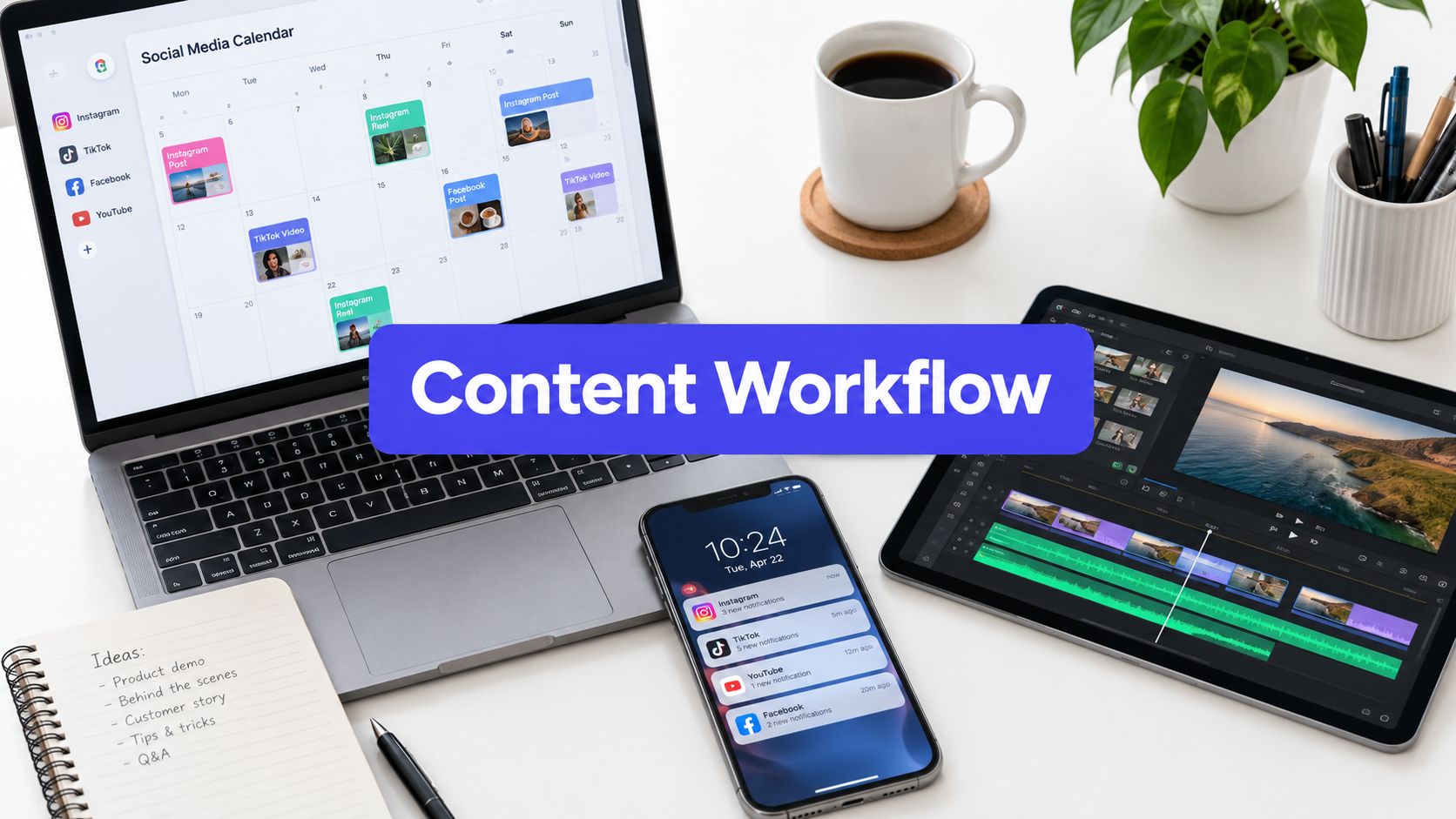
- Visual content calendar: You can see your week before you publish it. That matters when you're trying to balance original posts, replies, campaigns, launches, and repurposed content.
- Scheduling: You can prepare posts when you have focus, then publish them when your audience is active.
- Approval workflows: Teams can review copy before it goes live instead of fixing mistakes after the fact.
- Cross-platform publishing: You can adapt one idea across X, LinkedIn, Threads, Bluesky, Mastodon, and other networks without rebuilding the process from scratch.
That last point matters more than people think. A lot of teams don't fail because they lack ideas. They fail because every network turns into a separate manual job.
Use AI where it helps, not where it weakens the work
AI can speed up social execution, but only if you use it for the right tasks.
Good uses:
- turning rough notes into cleaner draft options,
- generating hooks from a blog post or PDF,
- adapting a message for different platforms,
- repurposing one long asset into several shorter posts.
Bad uses:
- outsourcing your point of view,
- publishing generic motivational filler,
- relying on drafts you didn't edit,
- sounding like every other automated account in the feed.
The strongest setup is human judgment plus machine speed. You decide what's true, useful, and worth saying. The system helps you package and schedule it.
If that's where you're headed, PostSyncer's guide on automate social media posting is a strong next step because it focuses on building a repeatable process instead of just pushing more content out.
What a scalable setup looks like
A workable routine for a solo creator or small team usually looks like this:
| Workflow stage | What happens |
|---|---|
| Planning | Choose themes, campaigns, and conversation angles for the week |
| Creation | Draft posts in batches, prepare visuals, refine hooks |
| Scheduling | Queue content at sensible times instead of posting reactively |
| Engagement | Use live time for replies, community interaction, and follow-ups |
| Review | Check analytics and fold top-performing patterns back into next week's plan |
That kind of structure is what turns “I should post more” into a real strategy.
You don't need enterprise complexity to get value from a system. You just need a workflow that helps you stay visible without burning out. That's the jump from beginner mode to professional mode on X.
If you're new to twitter and want a cleaner way to plan, schedule, repurpose, and measure your content across X and every major social platform, try PostSyncer. It gives creators, in-house teams, and agencies one workspace for content calendars, AI-assisted drafting, approvals, publishing, and analytics, so you can stay consistent without turning social media into a full-time scramble.