










Knowing your social media demographics by platform is what separates a marketing strategy that hopes for results from one that actually gets them. Real success isn't about chasing the platform with the most users; it's about finding out where your target audience genuinely hangs out, engages with content, and ultimately, makes buying decisions.
Why Platform Demographics Are Your Marketing Secret Weapon
Ignoring platform demographics is like setting up a shop selling snow gear in the middle of the desert. Sure, you can shout as loud as you want, but you’re talking to the wrong crowd. Every social platform is its own little world, complete with its own culture, unspoken rules, and distinct user base. A post that kills it on LinkedIn’s professional network will almost certainly die a quiet death amidst the fast-moving trends on TikTok.
Digging into the granular data—age, gender, location, and what users are there to do—is the bedrock of any solid digital strategy. It’s how you stop guessing and start making smart decisions that actually move the needle.
When you understand these nuances, you can:
- Spend Smarter: Put your budget and creative efforts where they'll have the most impact—on the platforms where your ideal customers are actually listening.
- Create Content That Clicks: Match your message, tone, and format to what users on a specific platform not only expect but enjoy seeing.
- Boost Your ROI: When you reach the right people with the right message, you get higher engagement, better conversions, and a much healthier return on your marketing dollars.
The goal isn't just to be seen by everyone. It's to be seen by the right people. Connecting with your core audience is almost always more valuable than a platform's total user count.
Platform Intent: A Quick Head-to-Head
Think of user intent as the "why" behind their scrolling. A person’s mindset changes completely when they switch from one app to another, and that's a critical piece of the demographic puzzle you can't afford to ignore.
| Platform | Why Users Are There | What This Means for Marketers |
|---|---|---|
| Career growth, industry networking, and professional learning. | Perfect for B2B marketing, establishing thought leadership, and recruiting top talent. | |
| TikTok | Pure entertainment, discovering trends, and watching short, authentic videos. | Brands need to entertain first, sell second. Raw, user-focused content wins here. |
| Visual inspiration, connecting with friends, and discovering products through aesthetics. | High-quality visuals, influencer marketing, and direct shopping features are the name of the game. | |
| Staying in touch with family/friends, local news, and community groups. | A great space for community building, promoting local events, and driving engagement in groups. |
Consider this guide your roadmap for moving beyond vanity metrics. It’s built for marketers who are ready to use real data to make their social media strategy smarter and far more effective.
A Quick Guide to Platform Demographics
Before we get into the nitty-gritty of each network, let's take a 30,000-foot view of the landscape. Think of this as your cheat sheet for social media demographics by platform—something you can reference when you’re in the early stages of planning. The truth is, every platform attracts a different crowd with very different motivations, which is why a "one-size-fits-all" content strategy just doesn't work.
The biggest differences usually boil down to two things: age and intent. Facebook's audience, for instance, has grown up with the platform; it’s now a go-to spot for Millennials and Gen X looking to connect with community groups and family. TikTok, on the other hand, is still the undisputed playground for Gen Z, a world driven by pure entertainment and lightning-fast trends. Getting these fundamental splits right is the first step. If you need a deeper dive into this, our guide on choosing the right social media platform is a great place to start.
Quick Guide to Social Media Platform Demographics
To help you get your bearings quickly, I’ve put together a table that breaks down the key demographic and behavioral differences across the big players. Use this to get a quick read on where your target audience is probably hanging out and what they’re looking for when they log in.
| Platform | Primary Age Group | Gender Split (Dominant) | Core User Intent |
|---|---|---|---|
| 25-34 (Millennials) | Male (57%) | Connecting with family, friends, and local community groups. | |
| 18-24 (Gen Z) | Nearly Even | Visual discovery, following influencers, and product exploration. | |
| TikTok | 25-34 (Millennials) | Male (56%) | Short-form entertainment, trend participation, and discovery. |
| 25-34 (Millennials) | Male (56%) | Professional networking, career development, and industry news. | |
| X (Twitter) | 25-34 (Millennials) | Male (60%) | Real-time news consumption, public discussion, and brand interaction. |
A quick glance shows platforms like TikTok and LinkedIn both have a strong user base in the 25-34 age range. But their user intent couldn't be more different. Someone opens LinkedIn to build their career, but they open TikTok for a quick hit of entertainment—a massive distinction for any content strategist.
This table really drives home how your brand's success metrics—engagement, conversions, and ROI—are directly linked to where you choose to show up.
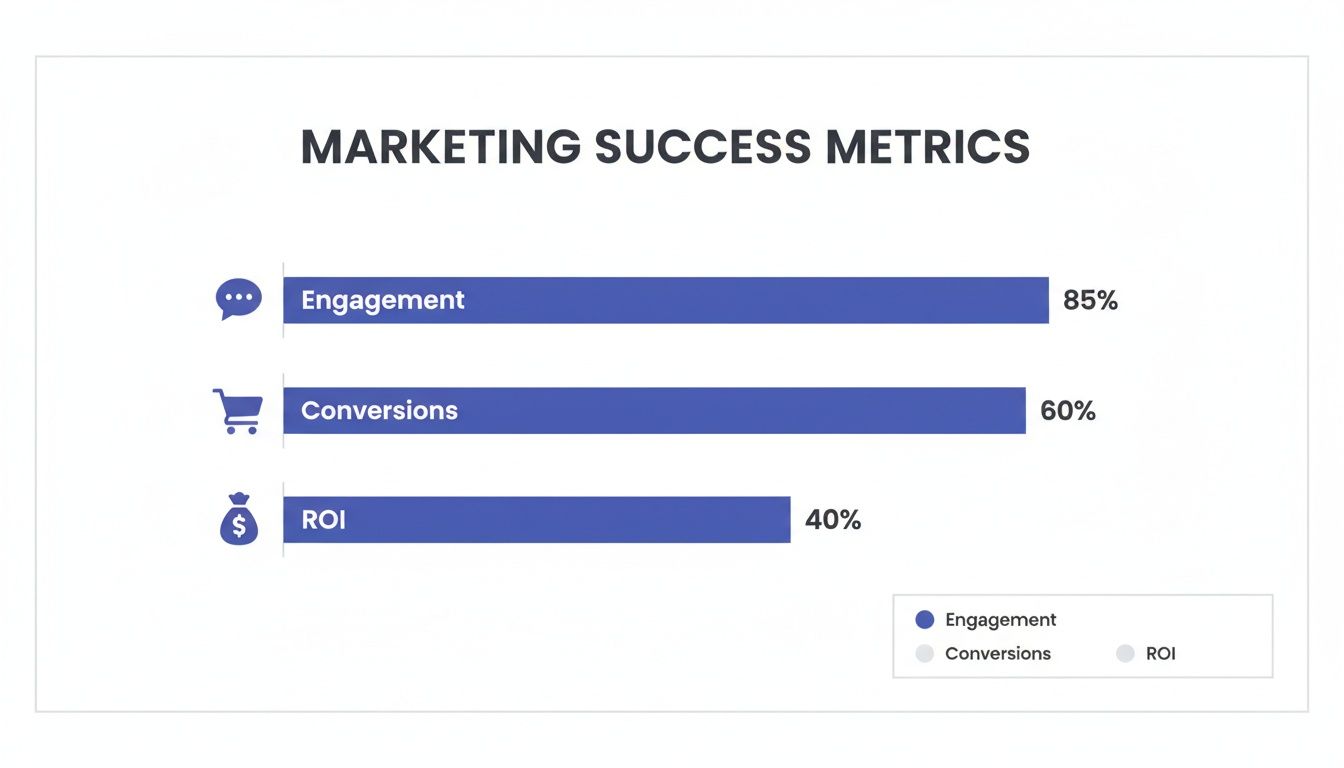
As you can see, sky-high engagement doesn't always lead to the best ROI. It all comes back to aligning your goals with the right audience on the right platform. If you want to dig even deeper into this data for your own market research, checking out some of the best social media scrapers can give you the tools you need. This quick overview should set the stage perfectly for the detailed platform breakdowns coming up next.
Facebook: The Multi-Generational Community Hub
Don't let its Ivy League origins fool you. Facebook has grown up, transforming from a college-kid network into the digital equivalent of a massive town square. It’s one of the few places online where you'll find your niece, your boss, and your grandma all in the same room, making it an incredibly powerful space for brands that know how to navigate its diverse crowd.
While younger users might be flocking to newer, shinier platforms, Facebook's core strength now lies with established adults.
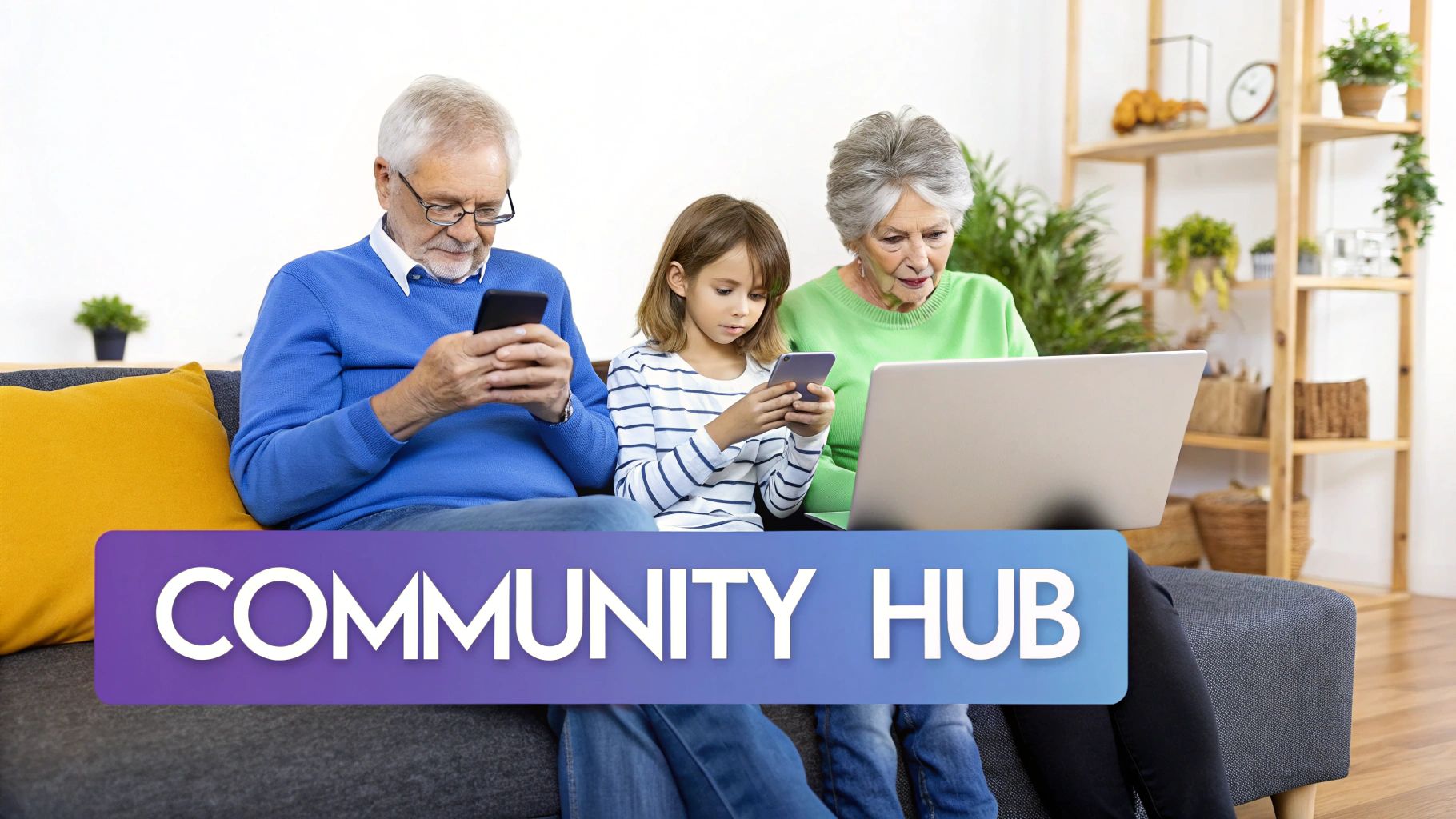
Make no mistake, this platform is still the undisputed king, boasting a staggering 3.07 billion monthly active users across the globe. The single largest age bracket is 25-34 year-olds, accounting for 31.1% of its user base. This is Millennial heartland. These are the users who grew up with the platform and now use it as professionals, parents, and homeowners. If you're interested in a deeper dive, you can discover more insights about social media statistics on sonary.com.
Who Is Actually Using Facebook and Why?
The platform's primary audience is a solid mix of Millennials (ages 25-40) and Gen X (ages 41-56). For them, Facebook isn't just a distraction; it's a fundamental tool for connection and information. Understanding why they log in is the key to creating content that actually works.
- Community Connection: This is huge. People are in local groups, hobby communities, and neighborhood forums asking for plumber recommendations, finding out about town events, or connecting over a shared passion for gardening.
- Family Updates: It’s still the default network for sharing major life milestones, vacation photos, and just staying in touch with relatives who live far away. Content that taps into family values almost always performs well.
- Local Commerce: Facebook Marketplace has become a behemoth, and local business pages are the new phone book. Users are actively looking for reviews, checking business hours, and hunting for deals from nearby shops and restaurants.
This deep-rooted community focus means the real action often happens in more private, trusted spaces—think Groups, not just public brand pages. Brands that figure out how to participate in (or even create) these conversations see far better engagement.
Facebook's real power has shifted from the public newsfeed to niche communities. If your brand can build or become a vital part of a dedicated Group, you can cultivate a level of loyalty that a standard brand page can only dream of.
Crafting Content for the Facebook Audience
Knowing these social media demographics by platform is your roadmap to creating content that resonates. The secret is to stop thinking like a massive corporation and start acting more like a helpful neighbor.
A local restaurant, for instance, will get way more traction by posting its daily special in a town foodie group than by running a generic, geographically-targeted ad. A real estate agent can build immense trust by sharing valuable market insights in a neighborhood group, establishing themselves as the go-to expert before anyone is even thinking of selling.
Best-Fit Content Types for Facebook:
- Community-Focused Posts: Ask questions that get people talking in groups. Feature user-generated content. Highlight local events or other businesses you partner with.
- Video Content: How-to guides, behind-the-scenes tours of your business, and heartfelt stories are perfect for connecting with Millennial and Gen X audiences.
- Practical Information: Simple, clear updates are golden. Users treat your page as a reliable source for business hours, new product arrivals, or service changes. Don't disappoint them.
At the end of the day, winning on Facebook comes down to being authentic and genuinely useful. Its users are there to connect with real people and find solutions to everyday problems. That makes it the perfect stage for brands ready to stop shouting and start building real relationships.
Comparing Instagram and TikTok: The Visual Battleground
While Facebook might cast a wide, multi-generational net, the real fight for the attention of younger users is happening on Instagram and TikTok. These two visual-first platforms are the absolute epicenters of youth culture, but they play by completely different rules. Understanding what makes each one tick is non-negotiable for any brand trying to connect with Millennials and, especially, Gen Z.
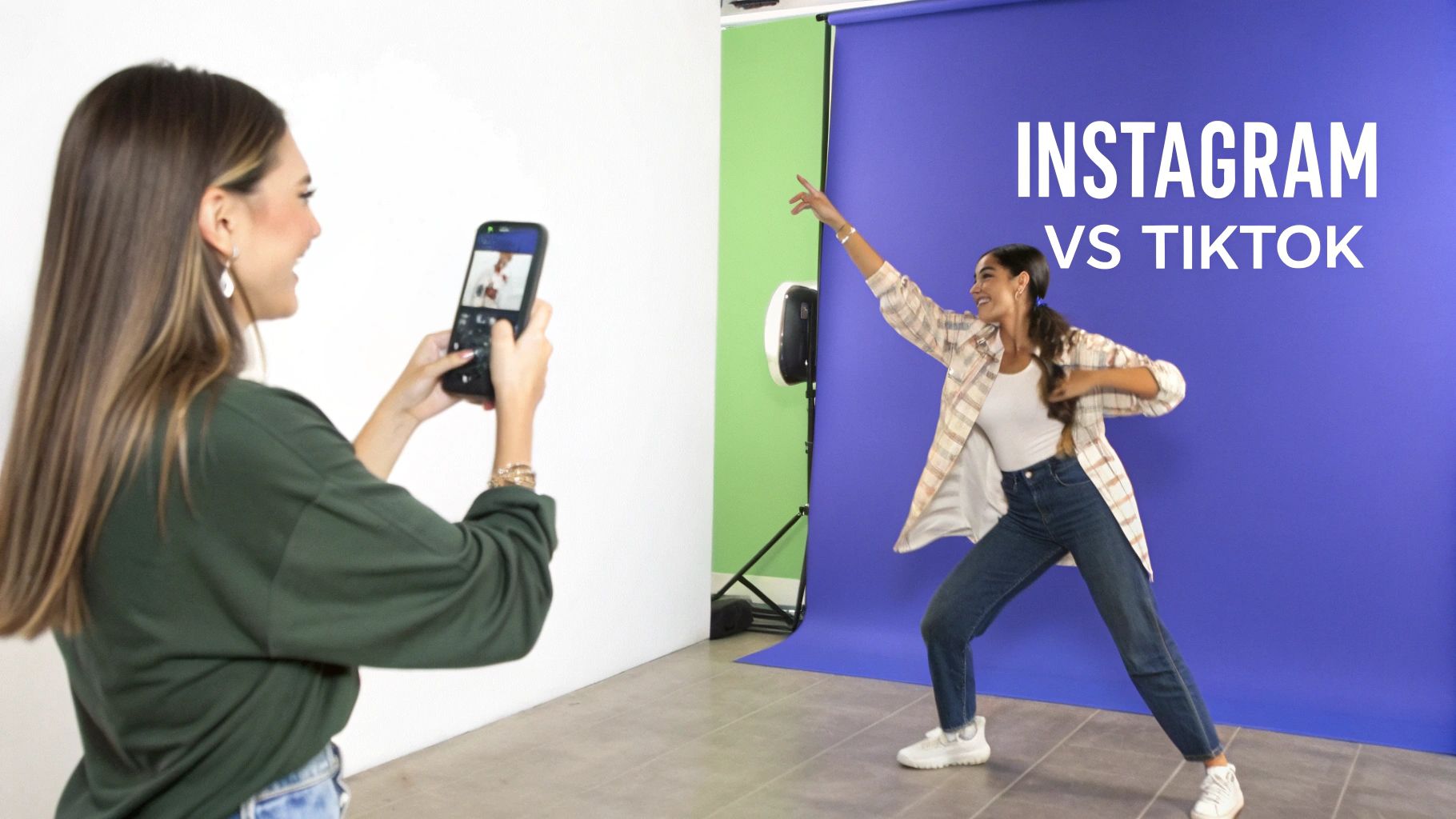
Think of Instagram as a polished, digital magazine. Its user base leans slightly older, with a solid grip on Millennials (ages 25-34) who crave its aesthetic-driven content. From stunning photography to perfectly produced Reels, this platform is a titan of visual storytelling, influencer marketing, and direct e-commerce through features like Instagram Shop.
TikTok, on the other hand, is the raw, unfiltered, and gloriously chaotic heart of Gen Z. Although its largest user group has technically shifted to 25-34 year-olds, its cultural gravity is undeniably powered by its younger audience. The whole platform runs on authenticity, user-generated trends, and short-form video that feels like it was made in the moment.
The Demographic Overlap and Divergence
On the surface, Instagram and TikTok look pretty similar, with both dominated by users under 35. The real difference isn't just who is on the platform, but why they're there. A user might scroll Instagram for lifestyle inspiration and to discover new products, then hop over to TikTok for pure, unadulterated entertainment.
Key Demographic Differences to Note:
- Core Millennial Base on Instagram: While Gen Z is a huge audience on Instagram, the Millennial user base is more established and often brings higher purchasing power. This makes it the go-to platform for brands selling premium or lifestyle-focused products.
- Gen Z's Cultural Stronghold on TikTok: TikTok is where trends are born. Its algorithm is legendary for making content go viral overnight—follower count be damned—giving brands a shot at tapping directly into the cultural zeitgeist.
- Gender Split Nuances: Instagram maintains a nearly even gender distribution, making it a balanced playing field for brands with broad appeal. TikTok’s user base has recently tilted to be slightly more male-dominated, a flip from its earlier days.
The core distinction comes down to polish versus participation. Instagram users are often spectators, following aspirational creators and brands. TikTok users are active participants, jumping into trends, duets, and challenges, making the entire experience far more interactive and community-driven.
Content Strategy: Instagram's Polish vs. TikTok's Authenticity
Your content strategy has to mirror these differences. A high-production video ad that crushes it on Instagram will likely feel jarringly corporate and out of place on a TikTok user's "For You" page.
For example, a fashion brand would use Instagram to showcase professional model shots, polished Reels of new collections, and collabs with big-name influencers. The whole point is to build an aspirational, curated brand image.
On TikTok, that same brand should be partnering with micro-influencers for "get ready with me" videos, joining viral dance challenges that subtly feature their clothes, or posting funny, behind-the-scenes content that shows they're human.
Platform Content Matchup
| Content Goal | Best Fit: Instagram | Best Fit: TikTok |
|---|---|---|
| Brand Storytelling | High-quality Carousel posts and curated Stories that build a narrative. | Raw, day-in-the-life vlogs and creator-led content. |
| Product Showcase | Aesthetically pleasing product shots and shoppable posts. | Unboxing videos, user-generated reviews, and trend-based challenges. |
| Driving Engagement | Q&A sessions via Stories, polls, and visually appealing Reels. | Duets, stitches, and participating in trending audio and effects. |
Instagram is a global force for capturing the attention of younger demographics, especially Gen Z and Millennials. In the US, a staggering 80% of adults aged 18-29 use the platform, which dwarfs the 19% of users aged 65+. The average daily time spent on social media for Gen Z females (16-24) is nearly three hours, with Instagram frequently at the top of their list. To get a deeper dive into how users are spending their time, you can read the full research about social media users on datareportal.com.
X vs. LinkedIn: The Public Square vs. the Professional Network
While platforms like Instagram and TikTok are locked in a battle for cultural supremacy, a different kind of showdown is happening between X (the platform formerly known as Twitter) and LinkedIn. These two text-heavy networks serve completely different, yet equally powerful, purposes. One is a fast-paced public square, the other a polished digital boardroom.
Figuring out their unique user bases is the first step in deciding where your brand should be talking.
X is the internet’s real-time pulse. It’s where news breaks, public opinion forms, and brands can have raw, unfiltered conversations. Speed and brevity are the name of the game, attracting a crowd that’s plugged into current events and ready to engage.
LinkedIn, on the other hand, is all about professional life. Every conversation is filtered through the lens of career growth, industry knowledge, and B2B connections. The user data here isn't just about age—it's about job titles, industries, and alma maters. It's a whole different world.
X: Where Millennials Go for News and Banter
X has successfully cornered the market on what’s happening right now. Its audience is smart, tech-forward, and skews male, with a solid Millennial foundation. These users are logging on for instant updates, clever takes, and to talk directly with big names and brands.
The platform's biggest asset is its conversational, almost chaotic, energy. It draws in a heavily male audience, with its largest age group—25 to 34—making up a massive 36.6% of its user base. That firmly plants it as the go-to spot for news and brand chats.
With around 570 million monthly active users, X is a beast. But the real story is the engagement: 35% of its users interact with brands every single day, and another 23% do it several times a week. Those numbers are way above average. You can dig deeper into brand interaction stats on Sproutsocial.com.
This makes X the perfect playground for:
- Real-Time Customer Service: Think airlines and tech companies. They thrive here by offering instant support and live updates.
- Public Relations: It’s the ideal channel for handling a crisis, dropping a press release, or jumping into a trending conversation.
- Brand Personality: This is where you can let your brand's hair down. Use humor, wit, and timely commentary to show you're more than just a logo.
LinkedIn: The Professional Powerhouse
If X is for public chatter, LinkedIn is for building professional credibility. Its audience is educated, ambitious, and often holds the purse strings at their companies. The demographics aren't just about age; they're about professional clout.
The platform is dominated by professionals in the 25-34 age bracket, which accounts for over 50% of its users. This tells you it’s filled with career-driven Millennials actively building their networks and climbing the ladder. They aren't there to mindlessly scroll; they're there to learn, connect, and make business moves.
Here’s the key difference: Someone opens X to see what the world is talking about. They open LinkedIn to see what their industry is talking about. That single distinction should shape every piece of content you create.
This laser-focused environment makes LinkedIn the undisputed champ for:
- B2B Marketing: The ability to target users by industry, company size, and job title is a B2B marketer's dream. It allows for incredibly precise campaigns.
- Thought Leadership: This is where CEOs, experts, and industry veterans publish articles and share deep insights to build their professional reputation.
- Talent Acquisition: It's still the number one spot for recruiters to find talent and for professionals to put their best foot forward.
So, Which One Do You Choose?
| Goal | Go with X When... | Go with LinkedIn When... |
|---|---|---|
| Lead Generation | Your audience is wide, and you can grab their attention with a viral post or a timely offer. | You need to get in front of specific B2B decision-makers with high-value, problem-solving content. |
| Brand Building | You're building a public-facing persona, want to be part of cultural moments, and need to handle customer service in real time. | Your aim is to be seen as an authority, show off your company culture, and become the trusted voice in your field. |
| Content Format | Short and punchy text, memes, quick video clips, and news links work best. | Long-form articles, detailed case studies, professional videos, and data-heavy infographics are king. |
At the end of the day, picking between X and LinkedIn isn't about which one is "better." It's a strategic choice based on what you're trying to achieve. If you need rapid-fire public engagement and a strong brand voice, X is your platform. If you're after targeted professional outreach and want to establish industry authority, LinkedIn is in a league of its own.
How to Choose the Right Platforms for Your Brand
Okay, so you've seen the data. You know who's on Facebook versus who's scrolling through TikTok. But turning all those social media demographics by platform into a smart, focused strategy? That's a whole different ballgame.
The goal isn't to be everywhere. That's a surefire way to stretch your team thin and burn through your budget with nothing to show for it. The real win is being exactly where your ideal customers are ready to listen, engage, and ultimately, buy.

Let's break down how to make that happen. It boils down to a simple, three-step framework that will keep you aligned with real business objectives instead of chasing empty vanity metrics.
Start With Your Ideal Customer Persona
Before you even glance at a platform's logo, you need a crystal-clear picture of who you're trying to reach. A detailed customer persona is the bedrock of your entire strategy, and it goes way beyond just age and gender. You need to get into their heads.
- Their 9-to-5: What's their job title? What industry do they work in? What are the biggest headaches they face at work?
- Their Downtime: What are their hobbies? What kind of content do they scroll through for fun on a Tuesday night?
- Their Online Life: Where do they get their news? How do they research a product before buying? Are they active members of niche online communities or forums?
Building out this profile is non-negotiable. If you need a more detailed walkthrough, our guide on how to identify your target audience is a great place to start. Think of this persona as your North Star for every single decision you make from here on out.
Define Your Primary Marketing Goal
Next up, what are you actually trying to accomplish? Different platforms are built for different things, so your main objective will immediately narrow down your options. Are you trying to build brand awareness, generate solid leads, or foster a tight-knit community?
Get specific. "Increase sales" is way too broad. A much better goal is something like, "Generate 20% more qualified leads for our B2B software through targeted content." That kind of clarity makes it infinitely easier to pick the right tools and measure what's working.
Your goal dictates the platform. A brand that wants to go viral and get massive exposure might lean into TikTok, while a company hunting for high-value B2B clients will find LinkedIn’s professional targeting far more effective.
Match Persona and Goal to Platform Demographics
Now it’s time to put it all together. With your persona and goal locked in, you can finally match them to the platform data. This is where the magic happens.
Let's look at a couple of real-world scenarios:
Scenario A: B2B Software Company
- Persona: CTOs and IT managers, typically aged 35-55.
- Goal: Generate high-quality leads for a new cybersecurity tool.
- Platform Match: It has to be LinkedIn. It's the watering hole for senior professionals who are actively looking for industry solutions and thought leadership. It’s a no-brainer.
Scenario B: Sustainable Fashion Brand
- Persona: Environmentally conscious Gen Z and Millennial shoppers, mostly 18-30.
- Goal: Build brand awareness and drive sales to their e-commerce site.
- Platform Match: Instagram and TikTok are your best friends here. Instagram is perfect for stunning product visuals, while TikTok’s authentic, trend-driven vibe can create incredible buzz and brand love.
Once you know where you’re going to play, the best brands develop proven social media video strategy examples that are tailored to feel native on each platform. When you systematically align your customer, your goal, and the platform's audience, you create a focused, high-impact social plan that drives real results—no wasted effort.
Got Questions? We've Got Answers
Trying to get a handle on social media demographics can feel like aiming at a moving target. The data is always shifting, and it's easy to get overwhelmed. Let's clear up a few of the most common questions marketers have so you can build your strategy on solid ground.
How Often Do Social Media Demographics Change?
Social media demographics are always in motion. You'll notice small shifts year to year, but the really significant changes tend to happen every two or three years as platforms evolve or new ones steal the spotlight.
The best rule of thumb is to do a full review of the demographic data at least once a year. This keeps your strategy fresh and pointed in the right direction, ensuring you're not still trying to reach an audience that packed up and moved on. Of course, you should always be watching your own numbers. For a deeper dive, check out our guide on using social media analytics for business.
Should My Business Be On Every Social Media Platform?
Definitely not. In fact, that’s one of the worst things you can do. Spreading your team thin across every platform out there is a fast track to burnout and mediocre content. It’s far smarter to build a strong, focused presence on the one to three networks where you know your target audience hangs out.
When you try to be everywhere, you end up being nowhere special. Use the demographic data to pick your battles, focusing your energy where it will have the biggest impact and align with your actual business goals.
The goal isn't to be seen by everyone; it's to be seen by the right people. Audience alignment is almost always more important than a platform's total user count.
Which Is More Important: Platform Size or Audience Alignment?
Audience alignment wins this matchup, every single time. Reaching 1,000 of your perfect customers on a smaller, niche platform is infinitely more valuable than shouting your message to 1 million people who couldn't care less on a massive one.
Think about it: a company selling high-end B2B software will get far more traction by targeting a small, concentrated group of executives on LinkedIn than it would chasing viral views on TikTok. It’s the quality of your reach, not the quantity, that actually drives results like leads and sales. Focus on connecting with the people who are most likely to become your best customers.
Ready to turn these demographic insights into a real-world strategy? PostSyncer gives you the AI-powered scheduling and analytics tools you need to reach the right audience on the right platform, every single time. Streamline your workflow and maximize your impact by visiting https://postsyncer.com to start your free trial.