








While there's no single magic bullet for the perfect Instagram post time, the data definitely shows some powerful windows of opportunity. Generally speaking, the sweet spots are during midday (11 AM–1 PM) and in the evening (7 PM–9 PM) on weekdays.
These time slots just make sense—they line up perfectly with common user habits like lunch breaks and post-work scrolling sessions.
Decoding Peak Instagram Posting Times
Trying to figure out the best time to post on Instagram can feel like trying to hit a moving target. But the core idea is actually pretty simple: post when your followers are most active.
Think of it like setting up a food truck. You wouldn't open up at 3 AM on a Tuesday; you'd roll up right as the downtown lunch rush is kicking into high gear. The same logic applies to your Instagram content—you want to show up when the digital highway is packed.
While the exact best time is unique to your audience, some broad patterns have emerged from how people use the app:
- The Morning Scroll (6 AM–9 AM): This is when people are just waking up or on their commute, and the first thing they often reach for is their phone.
- The Lunch Break (11 AM–1 PM): A super popular window for a quick social media catch-up between meetings and tasks.
- The Evening Wind-Down (7 PM–9 PM): After dinner, users are relaxed, settled on the couch, and scrolling leisurely.
This chart really breaks down where those key engagement windows fall.
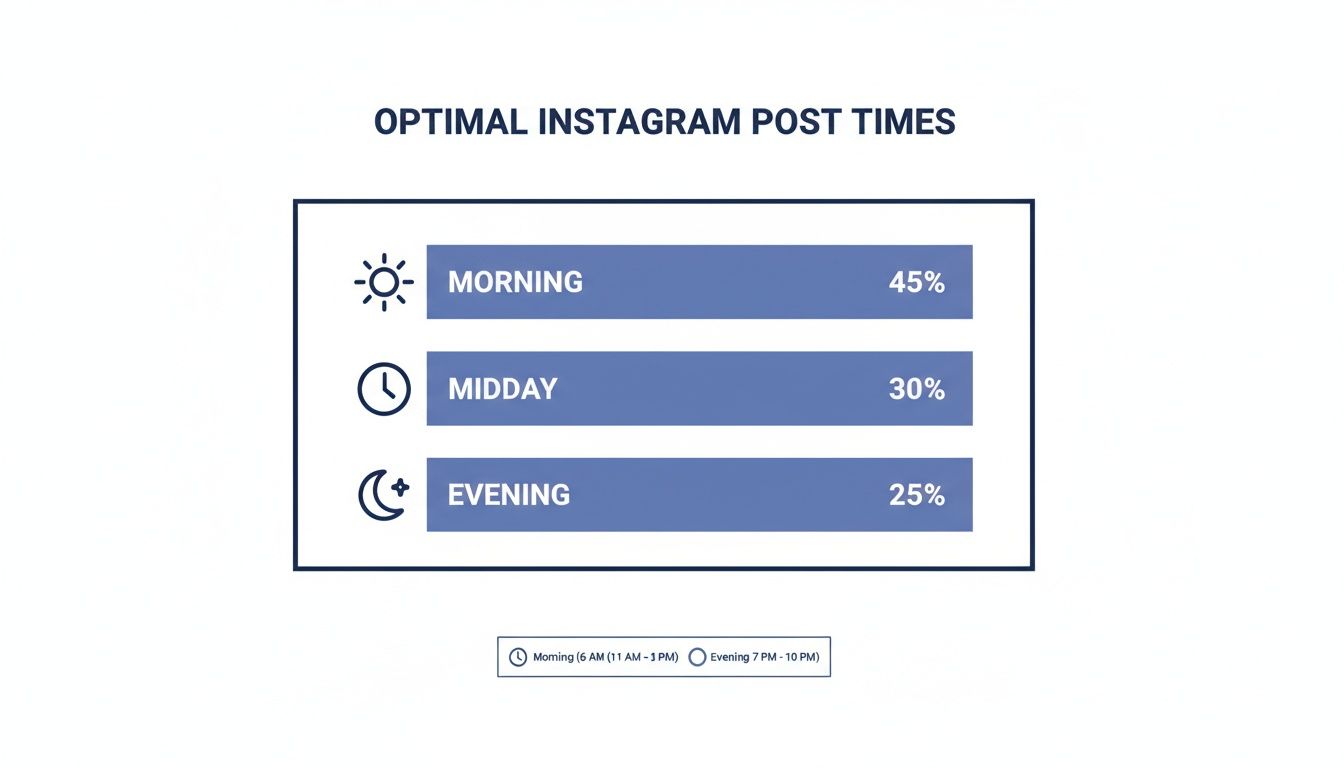
As you can see, midday and evening slots tend to capture the biggest slice of the audience pie. But don't sleep on the early morning—it’s a solid chance to reach people before their day gets too chaotic.
The Power of the Morning Post
That morning scroll is a surprisingly potent opportunity. One massive analysis found that posts going live around 6:00 AM local time can grab a huge amount of reach, simply because that's when a massive wave of users first logs on.
This "early bird" strategy taps into that universal habit of checking social media to kickstart the day. You can discover more about these Instagram posting patterns and figure out how to make them work for you.
To give you a clearer starting point, here's a table summarizing the most widely accepted peak times. Think of this as your baseline before you start digging into your own analytics.
General Peak Instagram Posting Times (Local Time)
| Day of the Week | Morning Peak | Midday/Afternoon Peak | Evening Peak |
|---|---|---|---|
| Monday | 7:00 AM | 11:00 AM–1:00 PM | 8:00 PM |
| Tuesday | 6:00 AM | 12:00 PM–2:00 PM | 9:00 PM |
| Wednesday | 8:00 AM | 11:00 AM | 7:00 PM |
| Thursday | 7:00 AM | 12:00 PM | 8:00 PM |
| Friday | 9:00 AM | 1:00 PM–3:00 PM | 7:00 PM |
| Saturday | 10:00 AM | 12:00 PM | 8:00 PM |
| Sunday | 9:00 AM | 1:00 PM–4:00 PM | 7:00 PM |
Remember, these are just general guidelines. The absolute best way to pinpoint your ideal posting schedule is to dive into your own Instagram Insights and see when your specific audience is online and engaging.
Why Posting Time Is Your Secret Weapon for Growth
Figuring out the best time to post on Instagram isn't just a minor detail—it's a core strategy for working with the algorithm instead of fighting against it. Think of the algorithm like a nightclub bouncer deciding who gets front-row access. When you post at a time your followers are most active, it's like showing up when the party is already in full swing. You get noticed right away.
That immediate burst of engagement is a powerful signal to Instagram that your content is worth showing to more people. The algorithm sees those quick likes, comments, and shares and thinks, "Hey, people are loving this." That early momentum is absolutely critical for your content to take off.
Triggering the Algorithmic Snowball
Picture your new post as a small snowball sitting at the top of a hill. If you share it at a quiet time, it might just sit there, not going anywhere. But when you post during peak hours, that first wave of viewers gives it an immediate push.
This is where the magic happens. That initial engagement starts the snowball rolling. As it picks up speed, it gathers more likes and comments, growing larger and traveling farther down the hill. This is a perfect analogy for how the Instagram algorithm works:
- Initial Engagement: Your most active followers see and interact with your post first.
- Broader Follower Reach: Seeing this, Instagram pushes the post out to a wider group of your followers.
- Explore Page Potential: If the snowball gets big enough and moves fast enough, your post breaks out and lands on the Explore page, reaching thousands of people who don't even follow you yet.
This snowball effect is the key to real organic growth. That first hour after you hit "publish" is the most crucial window to prove your content’s worth. Timing is what gives you the best possible head start.
Ultimately, great timing maximizes your visibility right out of the gate. By grabbing that immediate attention, you're essentially telling the algorithm your content deserves to be seen, which can turn a simple post into a potential viral hit and drive serious follower growth.
Sure, every Instagram account dances to its own beat, but when you zoom out and look at the bigger picture, you start to see some seriously powerful patterns. Large-scale studies show us that human behavior is, well, pretty predictable.
Figuring out the why behind these peak times is what separates the pros from the amateurs. It all boils down to the simple, universal rhythm of the daily scroll.
Just think about your own day. When are you most likely to grab your phone for a quick browse? These moments, these little windows of opportunity, are driven by routines most of us share. That’s what creates these golden hours for engagement.
The Three Pillars of the Daily Scroll
These daily habits are the bedrock of the universal "best times to post." When you line up your content with these moments, you’re basically tapping into a massive, ready-made audience that’s already there and waiting to engage.
Here’s how it typically breaks down:
The Morning Commute (6 AM - 9 AM): This is the "wake up and catch up" slot. People are scrolling through their feeds on the bus, on the train, or over their first cup of coffee. They're looking for quick hits of news and a little inspiration to get the day going. Motivational content absolutely crushes it here.
The Lunch Break (12 PM - 2 PM): Ah, the midday mental escape. People use their lunch break to decompress, see what their friends are up to, and look for a little entertainment. This makes it a fantastic time for a huge range of content, from funny videos to product showcases.
The Evening Unwind (7 PM - 9 PM): The day is done, dinner is over, and it's time to kick back on the couch. This is usually the longest and most relaxed scrolling session of the day, making it perfect for deeper content, compelling stories, and e-commerce posts as people chill out and plan their weekends.
If you want to get even more granular with this, our guide on the best times to post breaks it down even further.
This predictable flow of daily life creates a reliable engagement map. By posting during these key windows, you are essentially meeting your audience where they already are, drastically increasing your content’s visibility.
Recent data has only reinforced these patterns, and some days are even emerging as engagement titans. Thursdays around 9 PM local time, for instance, have become a real powerhouse slot. Why? It's driven by that late-evening screen time surge as everyone starts making weekend plans.
In fact, one analysis of over two million posts found that midweek evenings—especially Wednesday and Thursday—consistently pull in the highest numbers. You can learn more about these powerful midweek Instagram trends to see how to make them work for you.
Finding Your Audience's Unique Prime Time
General posting times are a great starting point, but real growth kicks in when you stop guessing and start digging into your own data. To figure out the absolute best time you should post on Instagram, you need to put on your detective hat. The clues are all there in your analytics; you just have to know where to look.
Your number one tool for this mission is Instagram Insights, the platform's built-in analytics suite. It’s packed with information about who follows you and, more importantly, when they’re actually online and scrolling. This is how you shift from following broad industry advice to creating a personalized schedule that actually works for your brand.
Navigating to Your Follower Activity Data
Getting to this goldmine of data is surprisingly easy. If you have a business or creator account, just head to your profile and tap on the "Professional Dashboard." From there, you'll see your Insights. The section we care most about is "Total Followers."
Once you're in, scroll down until you find the "Most Active Times" chart. This little visual is a powerhouse, breaking down follower activity by both the day of the week and the specific hour of the day.
Here's a look at what those activity charts look like inside your Insights.
See those darker bars on the chart? They show you exactly when you have the highest concentration of active followers. That, right there, is your audience's unique prime time.
But this data is just the first piece of the puzzle. It tells you when people are showing up to the party, but not what kind of party they're in the mood for.
To get the full picture, you need to cross-reference this activity data with how your posts are actually performing. Take a look at your top-performing posts—do they line up with these peak hours? Or do you see a different pattern?
Understanding these patterns is a cornerstone of a solid content strategy. For a much deeper look into this process, check out our complete guide on how to identify your target audience and use that knowledge to fine-tune your schedule. When you combine audience activity with content performance, you've cracked the case of your perfect posting time.
How to Automate and Optimize Your Posting Schedule

Okay, so you've figured out the best times to post on Instagram. That's a huge step, but it's only half the battle.
The real trick is actually posting at those peak moments. What happens when your prime time is 6 AM on a Sunday, or smack in the middle of a meeting? This is where trying to do everything manually starts to fall apart, and where automation becomes your new best friend.
Think of social media management tools as your personal content assistant. They let you build out your content calendar and schedule everything days, weeks, or even months ahead of time. This means you can keep up a powerful, consistent presence without being chained to your phone, ensuring you never miss a chance to connect with your audience when they're most active.
Let Smart Tools Do the Heavy Lifting
Today's scheduling platforms are so much more than simple timers. Many of them are now packed with AI-powered features that take all the guesswork out of the equation for you.
These smart tools dig into your unique audience data in real-time. They watch when your followers are liking, commenting, and sharing the most, and then they'll straight up tell you the best times to post for maximum impact.
It's like having a data scientist and a social media manager on your team, working 24/7. This isn't about following generic advice; it's about learning your specific audience's habits to find your perfect posting window.
For anyone serious about streamlining their workflow, looking through lists of the best AI tools for fashion brands can open up a world of resources to help optimize your schedule.
By embracing these platforms, you shift your entire strategy from being reactive to proactive. You'll get back countless hours of manual work and give every single post the best possible shot at success. Honestly, this kind of automated approach is essential if you want to scale your growth without burning out.
If you want to get into the nitty-gritty, our complete guide on automating Instagram posts walks you through the whole process step-by-step. Using automation isn't just a convenience—it’s about making smart, data-driven decisions that deliver real results and give your content the strategic edge it deserves.
Your Top Questions About Instagram Posting Times, Answered
Even with all the data in the world, you’re probably still sitting on a few specific questions. I get it. The nuances are where a good strategy becomes a great one. Let's tackle some of the most common points of confusion to help you build a posting schedule that feels like it was made just for your account.
Think of these as the final puzzle pieces. We're moving past the general advice to address the real-world situations every creator and brand runs into.
Do Reels and Feed Posts Need Different Posting Times?
Yes, they often do. While there’s definitely some overlap in peak times, you have to remember that Reels and standard feed posts serve slightly different purposes, and the algorithm treats them differently.
Let's break it down:
- Feed Posts: These are all about that initial rush of engagement from your followers. The first hour is everything. If your loyal audience sees and interacts with it quickly, Instagram shows it to more people. Timing is absolutely critical here.
- Reels: The algorithm gives Reels a much longer shelf life, sometimes pushing them into new feeds for days or even weeks. But—and this is a big but—posting during peak hours still gives it that crucial initial push to get the snowball rolling.
From what I’ve seen, Reels tend to pop off during prime entertainment hours, like evenings (8-10 PM) and on weekends when people are kicking back and scrolling for fun.
How Many Times a Week Should I Be Posting?
This is the big one, isn't it? The key thing to remember is that consistency will always beat frequency. Seriously. It is so much better to post three amazing, high-quality posts every single week than it is to burn yourself out forcing seven mediocre ones.
For most businesses and creators, 3-5 high-quality posts per week is the sweet spot. It’s sustainable, it keeps you on your audience's radar, and it gives you enough breathing room to actually create stuff you're proud of.
The real goal is to create a rhythm. When your audience knows they can expect great content from you on certain days, they start to look for it. That kind of anticipation is way more valuable than just cluttering their feed.
My Audience Is All Over the World. What Time Zone Do I Use?
A great problem to have! If you're building a global community, your first stop is always your Instagram Insights. Go look at your follower data and see where your biggest pockets of fans are by city and country.
Once you have that info, you have two solid plays:
- Cater to the Majority: Find your single largest audience segment and schedule your posts for their peak times.
- Find the Overlap: This is my favorite strategy. Look for a time that catches multiple time zones at a good moment. For example, an early morning post in North America will often hit your European followers right in the middle of their afternoon.
There's no single right answer, but by digging into your own analytics, you can make a smart, data-backed decision instead of just guessing.
Ready to stop guessing and start scheduling with confidence? PostSyncer’s AI-powered tools analyze your unique audience data to pinpoint your perfect posting times automatically. Start your free trial and optimize your schedule today!