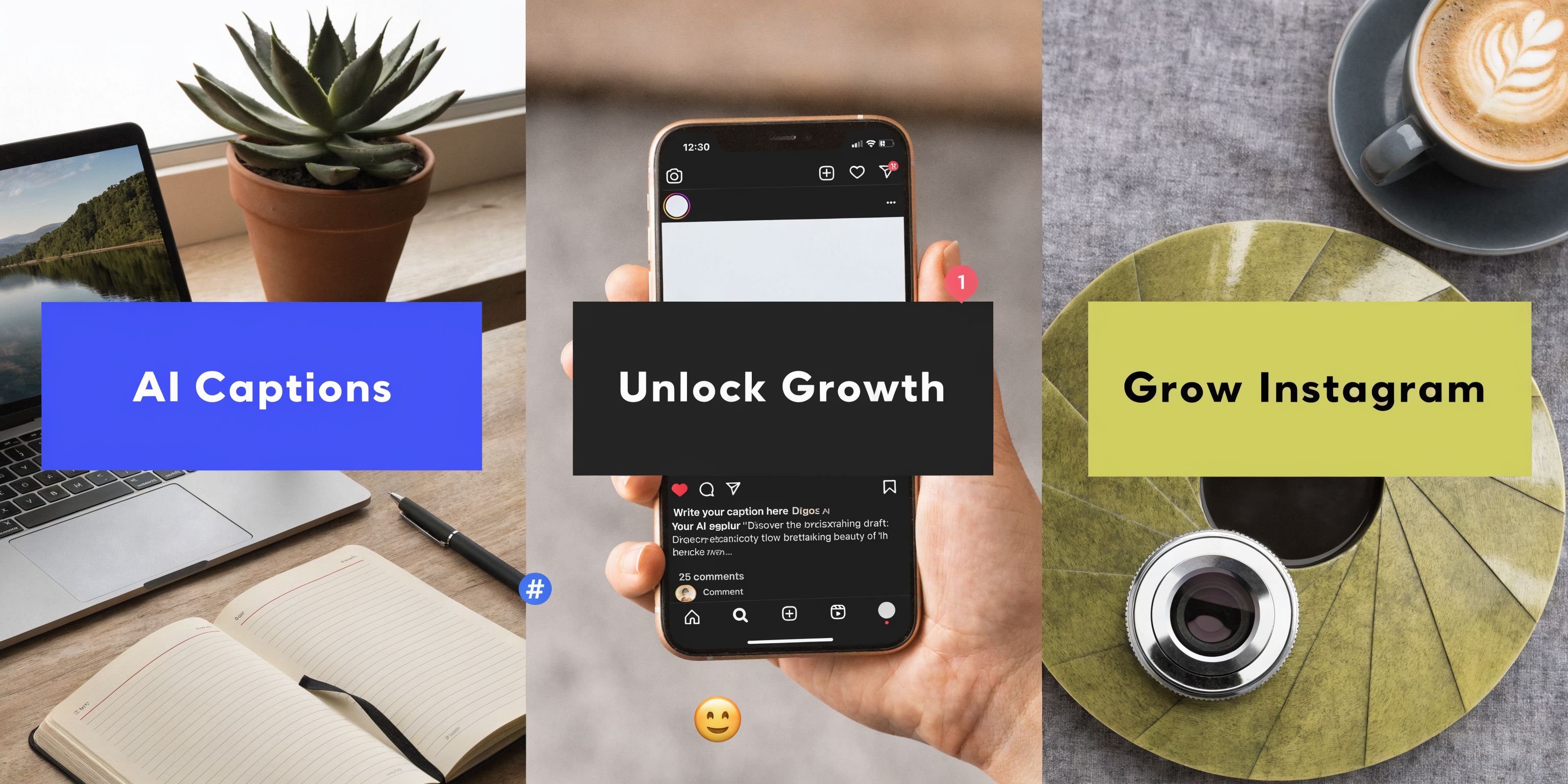











You’ve got the post ready. The creative is decent. The Reel is edited. Then Instagram opens that little field that says “Write a caption...” and the momentum dies.
That’s where many teams lose time. Not in production, but in the last mile. They either publish with a weak caption, overthink it for fifteen minutes, or paste something generic that sounds like every other account in the feed.
A good ai caption generator for instagram fixes that, but only if you use it as part of a full workflow. The primary win isn’t getting one caption fast. It’s building a repeatable system for generating, refining, testing, scheduling, and learning from every post so the next caption performs better than the last one.
Why AI Captions Are Your New Secret Weapon
Instagram is crowded enough that “good content” by itself isn't enough. The platform reached 2 billion monthly active users by mid-2024, and posts with captions around 138 to 150 characters can see up to 38% higher engagement rates, according to the data summarized by Koala’s Instagram caption generator research.
That matters because captions are no longer decorative. They’re part of discoverability, context, and conversion.
Consistency beats occasional brilliance
Most brands don’t struggle because they have zero ideas. They struggle because they can’t keep producing strong captions week after week.
AI helps with the part that drains energy:
- Hook generation: It gives you multiple openings instead of one blank screen.
- Angle variation: You can ask for educational, playful, direct, or story-based versions quickly.
- Routine output: It supports a posting cadence without making every caption sound rushed.
Manual caption writing still has value. But if you’re posting often, the friction adds up. An AI tool can handle first drafts so you can spend your attention on message quality, audience fit, and replies.
Practical rule: Use AI to produce options, not final copy. The strategic advantage comes from speed plus judgment.
AI is better as a partner than a replacement
The strongest social managers don’t hand the wheel to AI. They use it like an overprepared junior copywriter.
That means you still decide:
- what the post needs to accomplish
- what tone fits the audience
- whether the CTA should drive comments, saves, clicks, or DMs
- which ideas are on-brand and which ones need to be cut
Teams that treat AI as infrastructure get more from it than teams that treat it as magic. If you’re shaping a broader workflow around content operations, this piece on Generative AI strategic advisory is useful because it frames AI as a system decision, not just a writing shortcut.
Why this matters right now
Instagram rewards relevance, clarity, and consistency. AI helps with all three when the prompts are specific and the editing is human.
The biggest shift isn’t that AI can write captions. It’s that you no longer need to burn creative energy on version one. That energy is saved for version three, which is usually the one worth publishing.
Crafting the Perfect Prompt for Your Instagram AI
Most bad AI captions come from bad instructions. Not bad tools.
If you type “write me an Instagram caption for my post,” you'll get filler. If you give the model a role, a goal, context, format rules, and a CTA target, the output gets sharper. Structured prompting can improve engagement by 35% to 50% over generic inputs, and placing a question in the first 125 characters can lift comment rates by 22%, according to Thrumos on AI-powered Instagram caption engineering.

The six parts of a prompt that works
A strong prompt includes these ingredients:
Role Tell the AI who it is. “Act as a senior Instagram strategist for a skincare brand” works better than no role at all.
Post context State whether this is a Reel, carousel, product launch, founder story, or before-and-after post.
Audience Define who should care. Beginners, moms, SaaS founders, local customers, agency owners. Be specific.
Goal Pick one outcome. Comments, saves, DMs, clicks, profile visits. Mixed goals create muddled captions.
Tone and constraints Ask for casual, sharp, warm, bold, or educational. Add limits on length, emojis, and hashtag style.
Output format Request multiple caption variants and tell the AI how to structure them.
Use a simple prompt formula
Here’s the format I’d often use:
Act as a social media manager for [brand type]. Write 5 Instagram caption options for a [post type] aimed at [audience]. The goal is to [goal]. Use a [tone] voice. Include a strong first-line hook, keep the caption easy to skim, add a CTA that encourages [comments/saves/DMs], and include [hashtag instruction]. Avoid clichés and generic motivational language.
That formula works because it forces clarity. The AI stops guessing.
If you want a broader library of prompt structures outside Instagram-specific use cases, this roundup of effective AI prompts is a solid reference for sharpening instruction quality.
Prompt examples you can paste and adapt
Below is a working table you can reuse.
| Goal | Post Type | Prompt Template |
|---|---|---|
| Drive saves | Carousel | Act as an Instagram strategist for a marketing brand. Write 5 caption options for a carousel teaching small businesses how to improve Instagram hooks. Audience is busy founders with limited time. Goal is saves. Use a clear, practical tone. Start with a strong hook, keep paragraphs short, add a CTA asking readers to save the post for later, and include 3 to 4 relevant hashtags. |
| Increase comments | Reel | Act as a witty social media manager. Write 5 caption options for an Instagram Reel showing behind-the-scenes product packaging. Audience is loyal customers and curious new followers. Goal is comments. Put a question in the first line, make the tone playful, use light emoji use, and end with a CTA asking viewers to answer in the comments. |
| Get DMs | Single-image post | Act as a conversion-focused Instagram copywriter for a service business. Write 5 caption options for a single-image post announcing a limited consulting offer. Audience is startup founders. Goal is DMs. Use a confident but not pushy tone. Lead with a specific pain point, explain the offer briefly, and end with a CTA inviting people to DM the word START. |
| Build trust | Founder post | Act as a thoughtful brand storyteller. Write 5 Instagram caption options for a founder photo and story post. Audience is early-stage business owners. Goal is trust and profile engagement. Use a reflective, grounded tone. Include a short personal anecdote, a lesson learned, and a CTA asking readers what they would’ve done in the same situation. |
| Promote product discovery | UGC post | Act as a social media manager for an e-commerce brand. Write 5 Instagram captions for a customer photo featuring our product in daily use. Audience is first-time buyers. Goal is product interest and saves. Keep the tone warm and natural, mention one practical product benefit, and close with a CTA encouraging people to save the post or browse the link in bio. |
Match the prompt to the post format
Different Instagram formats need different caption behavior.
Reels need speed
For Reels, the caption should support the video, not compete with it. Ask for:
- A short hook
- One core message
- A direct CTA
- Compact formatting
If your prompt produces long paragraphs for a Reel, tighten it.
Carousels need payoff
For carousels, the caption should frame the value and give people a reason to swipe or save.
Useful prompt language:
- “Tease the lesson without giving away every point.”
- “Make the first line curiosity-driven.”
- “End with save this for later.”
Single-image posts need context
Still images often need more explanatory weight. Ask the AI to add:
- Context for the visual
- A point of view
- A specific emotion or takeaway
That’s especially important for product photos and polished brand images, which can look good but feel empty without the right text.
One prompt mistake that causes generic captions
The most common failure is vague context.
Bad prompt: “Write an Instagram caption for a coffee post.”
Better prompt: “Write 5 Instagram caption options for a Reel showing a café owner making the first pour-over of the morning. Audience is local customers and coffee enthusiasts. Goal is comments and shares. Tone is warm, local, and lightly playful. Include one caption with a question-based hook and 3 to 4 hashtags.”
The second prompt gives the model enough direction to produce options you can use.
For a broader content workflow that connects AI writing with publishing systems, this guide on https://postsyncer.com/blog/ai-social-media-content-creation is worth reading.
Selecting and Refining Your AI-Generated Captions
The AI draft isn’t the product. It’s the raw material.
That’s where a lot of people get sloppy. They generate five options, pick the least embarrassing one, and post it unchanged. That’s how you end up with captions that are technically fine but forgettable.
Advanced generators now use predictive scoring, and brand-trained tools can reach 80% usable output compared with 30% for generic chatbots. Tone rewriting toward a more conversational style can also boost relatability by 28%, based on the benchmarks summarized by Jasper’s Instagram caption generator.

How to pick the right draft
Don’t choose the caption that sounds the most polished. Choose the one that does the job best.
I review drafts in this order:
- Hook strength: Does the first line stop a scroll?
- Clarity: Can someone understand the point fast?
- Message fit: Does it match the actual post?
- CTA quality: Is the next action obvious?
- Brand fit: Does this sound like your account, not a default AI voice?
A slightly rough caption with a sharp hook is often better than a smooth caption that says nothing.
Good captions don’t just read well. They create a next step.
Edit for voice, not just grammar
Most AI captions fail on tone before they fail on correctness.
If your brand is dry and smart, remove the overexcited phrases. If your audience likes practical advice, cut the vague inspiration. If your customers know the jargon, don’t over-simplify.
What I change first
First line AI often opens too safely. Rewrite it into a clearer hook or stronger question.
Middle section Tighten repetition. AI loves saying the same point twice with different words.
CTA Replace weak endings like “Let us know your thoughts” with something specific.
Examples:
- “Which slide was most useful?”
- “Would you try this?”
- “Comment START if you want the template.”
- “Save this before your next content batch.”
Clean up hashtags and emojis
Hashtags and emojis still help when they support the message. They hurt when they make the caption look automated.
Use hashtags with intent. If you need a sharper process for finding them, this guide on https://postsyncer.com/blog/how-to-find-trending-hashtags is useful.
A few practical rules:
- Keep hashtags relevant: Match them to the post topic and audience, not just broad popularity.
- Don’t make them the whole strategy: Weak copy doesn’t become strong because of tags.
- Use emojis for scanning: One well-placed emoji can improve readability. A pile of them makes the post look noisy.
A fast human editing checklist
When the draft is close, run this filter before publishing:
| Check | What to ask |
|---|---|
| Hook | Would I stop for this first line? |
| Specificity | Is there one concrete idea or is it generic? |
| Tone | Would my audience recognize this as our voice? |
| CTA | Is the action clear and easy? |
| Readability | Can someone skim this in seconds? |
That final pass is where the caption starts sounding owned instead of generated.
Running A/B Tests to Find Your Winning Formula
The biggest mistake with Instagram captions is treating every post like a fresh guess.
You don’t need a complicated testing lab to improve results. You need a controlled way to compare one caption variable against another. That’s especially worth doing because posts using AI-optimized captions have shown 15% to 25% increases in reach and 40% more comments, while adoption of AI caption tools has grown 300% since ChatGPT’s launch in late 2022, according to Hootsuite’s AI caption generator overview.
What to test first
Start with variables that influence interaction directly.
Hooks
Test:
- Question hook versus bold statement
- Pain point opening versus curiosity opening
- Short first line versus slightly more descriptive first line
Hooks shape whether people stop and read. Weak hooks waste strong posts.
Calls to action
This is the easiest win.
Compare:
- “Save this for later”
- “Comment your answer”
- “DM me the word GUIDE”
- “Tag someone who needs this”
Different audiences respond to different asks. Don’t assume your favorite CTA is the one performing best.
Caption structure
Try one simple test:
- Version A uses short paragraphs and a direct CTA.
- Version B uses a story-led caption with a softer CTA.
Some audiences want utility fast. Others respond better to narrative.
Keep the test clean
A/B testing fails when too many things change at once.
Use this simple framework:
Choose one variable Only test the hook, CTA, or structure. Not all three.
Use similar post types Compare Reel to Reel or carousel to carousel. Don’t compare completely different content formats.
Watch the right metric If the CTA asks for comments, comments matter more than likes. If the goal is saves, track saves.
Record the pattern One post can mislead you. Look for recurring behavior over multiple posts.
Comments and saves matter more than likes
Likes are easy. They’re also a weak strategic signal compared with deeper actions.
A caption that gets people to comment, save, or message tells you more about resonance than one that just collects passive approval. That’s why CTA testing is worth the time.
Test the line that changes behavior, not the line that sounds cleverest.
Build your own caption playbook
After a few rounds of testing, patterns show up.
You may learn that your audience responds better to:
- Question-led openings
- Two short paragraphs instead of one long block
- Direct save CTAs on educational posts
- More grounded language and fewer hype words
Once you spot that, turn it into a repeatable system. Feed those learnings back into your prompts.
That’s when an ai caption generator for instagram starts becoming a performance tool instead of just a convenience tool.
Scheduling and Publishing Your Captions with PostSyncer
A caption draft sitting in a notes app isn’t helping anyone. The workflow only becomes useful when creation, adaptation, and publishing happen in the same operating rhythm.
That’s where most standalone generators fall short. They can write Instagram copy, but they don’t solve the rest of the publishing job. Existing tools miss multi-platform adaptation, while one integrated workflow can reduce manual editing for cross-network publishing by up to 70%, according to the gap described in Pallyy’s overview of Instagram caption generators.

What the workflow looks like in practice
Say you’ve got one strong Instagram Reel caption. On its own, that’s useful. But many teams need more than one post on one network.
A cleaner workflow looks like this:
- draft the Instagram caption
- refine it for tone and CTA
- adapt the same idea for LinkedIn, X, Threads, or Pinterest
- route it for approval if needed
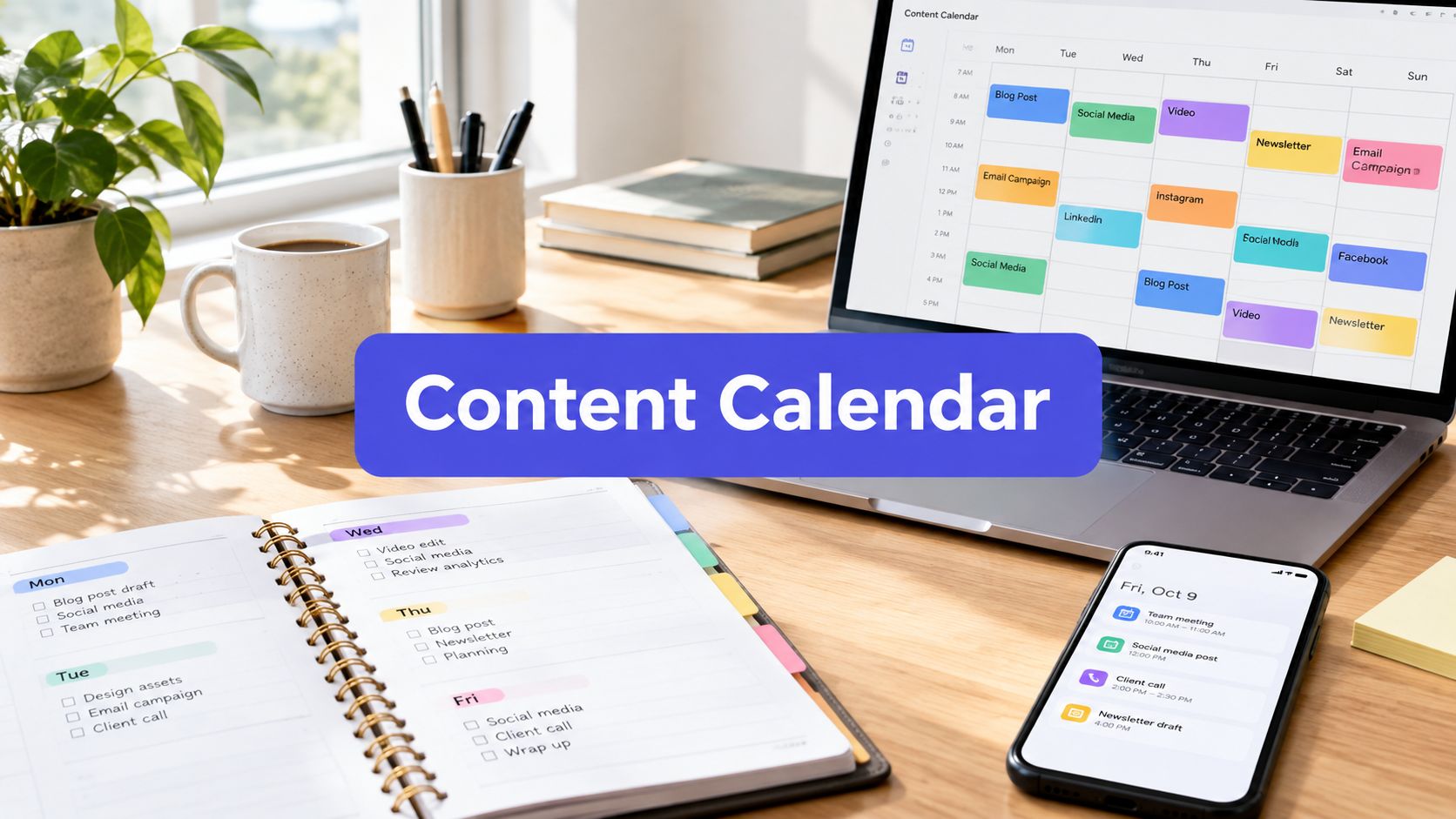
- place it on a content calendar
- schedule it without moving between separate tools
That’s the practical reason schedulers matter. They remove the handoff friction.
Adapt the message, not just the text
A common mistake is copying the Instagram caption everywhere.
That works rarely because each platform has a different reading style. Instagram tolerates warmer, more visual, more conversational language. LinkedIn needs a clearer professional angle. X tends to reward brevity and sharper framing.
A single idea can travel across channels. The wording shouldn’t stay identical.
Here’s a simple adaptation model:
| Platform | What to keep | What to change |
|---|---|---|
| Hook, emotion, CTA intent | Keep it skimmable and audience-friendly | |
| Core lesson | Make the takeaway more explicit and professional | |
| X | Sharp opinion or insight | Compress aggressively |
| Utility | Emphasize searchable, practical language |
Publishing from one workspace matters more than people admit
For teams, the hidden time sink isn’t writing. It’s moving content around.
One person writes the caption. Another edits. A client wants approval. Someone else pastes the final version into a scheduler. Then a channel-specific version gets requested at the last minute.
That’s where a platform like PostSyncer’s Instagram scheduler fits. It combines scheduling with content operations so the caption doesn’t have to leave the workflow every time someone needs to review, adapt, or queue it.
A practical walkthrough helps more than theory, so here’s the video:
A key benefit is fewer broken handoffs
An all-in-one workflow reduces small errors that hurt consistency:
- Wrong caption on the wrong asset
- Old draft getting scheduled
- Platform formatting mismatches
- Approval bottlenecks
- Missed publishing windows
When the caption, asset, calendar, and approval process live together, you spend less time babysitting execution.
That’s the part many marketers underestimate. Smooth publishing doesn’t feel flashy, but it protects the quality of the strategy you already built.
Measuring Performance and Closing the Analytics Loop
Most caption workflows stop too early. The post goes live, a few vanity metrics come in, and the team moves on.
That leaves the most valuable part on the table. Performance data should shape the next prompt.

Read the caption like a pattern, not a single result
A single post can overperform for reasons that have nothing to do with the caption. Timing, creative quality, trend alignment, audience mood. All of that matters.
What you want is pattern recognition.
Look across several posts and ask:
- Which caption style gets more comments?
- Which CTA drives more saves?
- Which openings hold attention better?
- Which topics lead to profile actions or site clicks?
That’s how you close the loop. You stop evaluating isolated posts and start identifying repeatable behavior.
Turn results into prompt instructions
This is the step many people skip.
If you notice that short question-led captions beat story-led captions for educational Reels, that insight shouldn’t stay in a spreadsheet. It should go into your next prompt.
For example:
- “Use a question in the first line.”
- “Keep the caption under three short paragraphs.”
- “End with a save-focused CTA.”
- “Avoid broad inspirational framing.”
- “Use a practical tone, not playful.”
Those instructions are far more useful than “write me a better caption.”
Analytics aren’t a report card. They’re training data for your next decision.
What to track beyond likes
If the post supports a business goal, your review should include more than surface engagement.
Focus on outcomes tied to the purpose of the post:
- Comments for discussion and conversation quality
- Saves for educational or reference content
- DMs for offer-driven posts
- Profile actions when the goal is account growth
- Clicks or conversions when the post supports traffic or sales
Different caption types serve different jobs. Judge them accordingly.
Build a recurring review habit
You don’t need a huge analytics ritual. You need a consistent one.
A simple monthly review works:
- Pull your strongest and weakest posts.
- Compare hooks, structure, CTA, and tone.
- Note what repeated among the winners.
- Update your prompt templates.
- Retest with the next content batch.
That cycle is what separates random improvement from compounding improvement.
An ai caption generator for instagram becomes much more valuable when it learns from your actual audience behavior, even if the “learning” is you refining the prompts based on what the numbers keep telling you.
Common Questions About AI Instagram Captions
Will AI captions make my brand sound generic
They will if you publish them untouched.
AI is strong at first drafts, variation, and speed. It’s weaker at nuance unless you give it clear instructions and edit the result. Brand voice still comes from your examples, your constraints, and your judgment.
Does Instagram penalize AI-written captions
What matters is content quality and audience response. If the caption is useful, relevant, and engaging, the fact that AI helped draft it isn’t the primary concern. The bigger risk is publishing lazy output that feels mass-produced.
Are free tools enough
They’re enough for brainstorming. They’re not enough for a full workflow.
The biggest gap in standalone generators is analytics. Many can generate copy, but they don’t help you A/B test it or connect the result to performance. That matters because the weakness of static generation becomes obvious once you compare it against feedback-informed optimization, as discussed in Copy.ai’s Instagram caption generator page.
What’s the smartest way to use AI for captions
Use it in a loop:
- prompt with clear context
- generate multiple options
- edit for voice and clarity
- test hooks and CTAs
- review performance
- update your prompts
That process is what makes AI useful. Not the one-click draft.
If you want one place to handle caption generation, publishing, and analysis across multiple networks, PostSyncer is built for that workflow. It helps teams create captions, adapt them by platform, schedule content from a shared calendar, and review performance so the next round of posts gets sharper instead of starting from zero.